

We have an honest review policy, but this page contains affiliate links. If you buy through these, we may earn a commission. This helps fund our research at no cost to you.
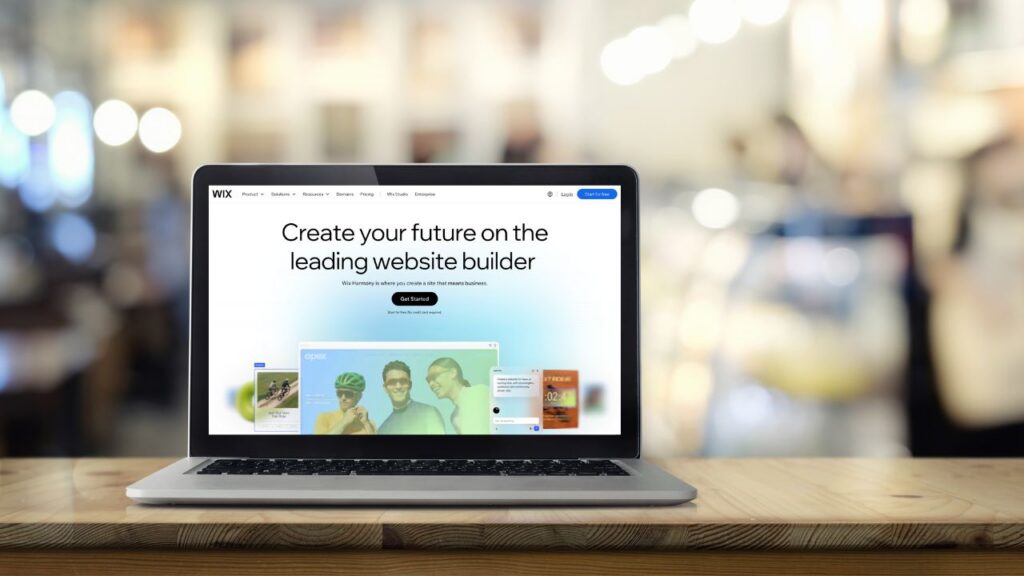
In this Wix review, you’re going to learn all about the platform’s key pros and cons — and who it’s best suited to. First up, you’ll find my quick verdict on the platform, followed by a deep dive into it.
Quick verdict
Wix is a good choice for small businesses, freelancers, and individuals who want an easy way to build an attractive, easy-to-manage website. A subscription to the platform provides genuine value for money, as it gives you a website editor, selling tools, a blog, galleries, video hosting, appointment booking and more all in one place.
There are some significant disadvantages to using Wix, however. It doesn’t let you switch templates or move your site to another platform easily, and many of its templates are not fully responsive. In particular, Wix’s ecommerce features need improvement — they’re fine for simple selling, but not ideal for selling internationally or building a large-scale ecommerce business.
So, for a small business or “solopreneur” website, Wix is a good option. For a larger-scale or international ecommerce project, I’d look elsewhere, most likely in the direction of WordPress for content sites or Shopify for ecommerce.
Wix video review
Key alternatives to Wix
- Best alternatives for building content sites: WordPress or Squarespace
- Best alternative for ecommerce: Shopify
Try Wix for free
I’ll continue my deep dive with an overview of Wix and a look at who it’s best suited to.
A quick overview of Wix
Wix is a hosted platform, meaning that everything you need to create and run your site is provided in one place. Wix sites are built and managed in a web browser — you create an account, pick a template, add your content and edit your design.
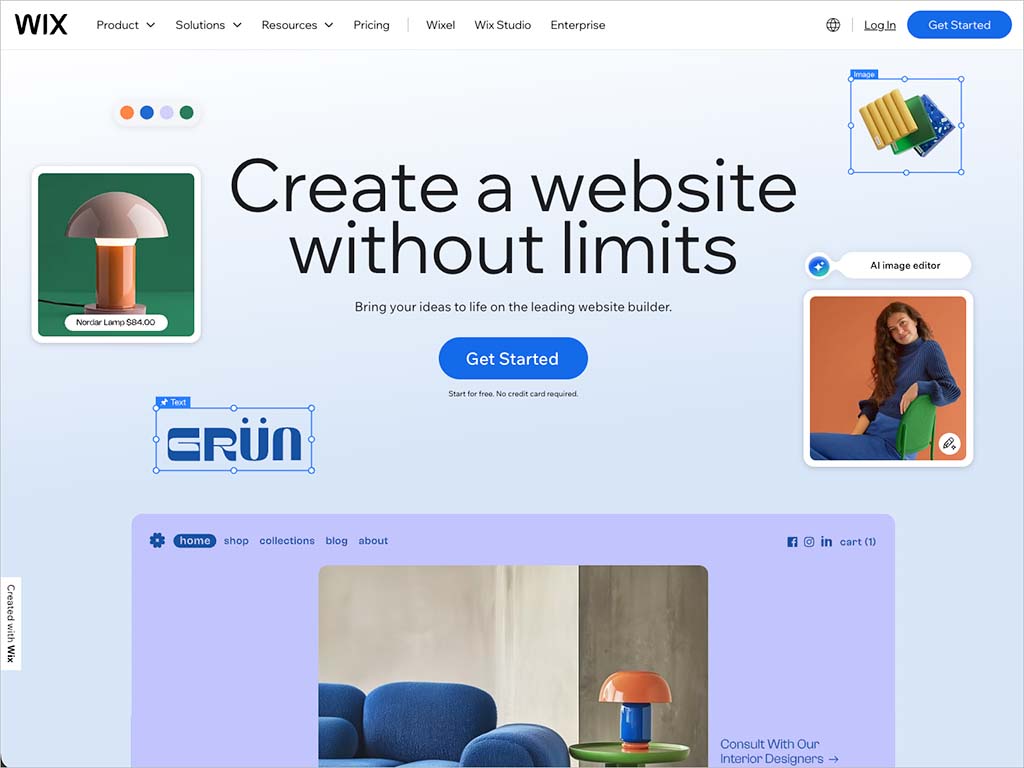
The platform is particularly suited to:
- small businesses that want to build a website without hiring a developer
- freelancers, consultants, and creatives who need a portfolio or brochure site quickly
- service businesses that need bookings, forms, or appointment scheduling
- smaller ecommerce merchants whose selling requirements aren’t especially complicated.
How Wix works and how much it costs
There are now two main ways to build a Wix website.
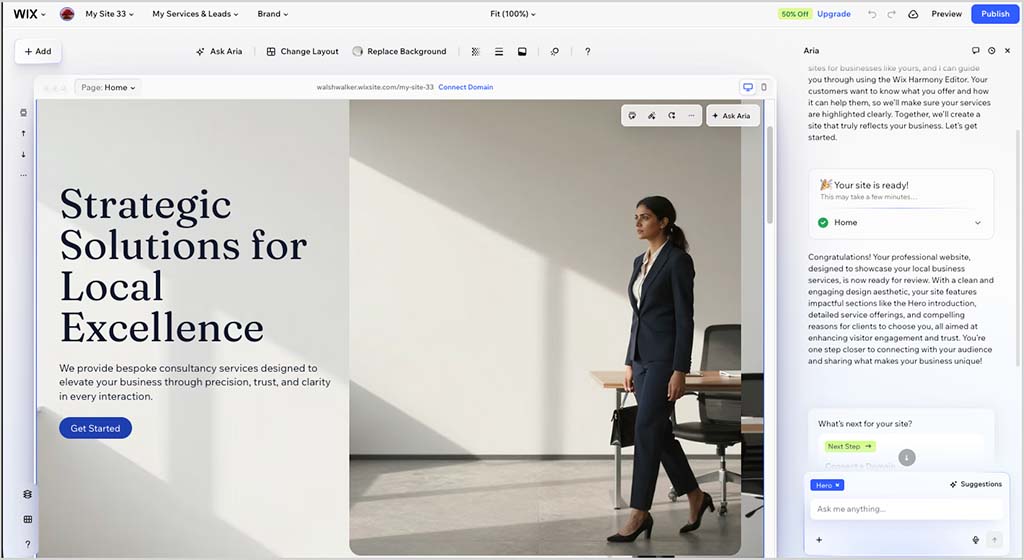
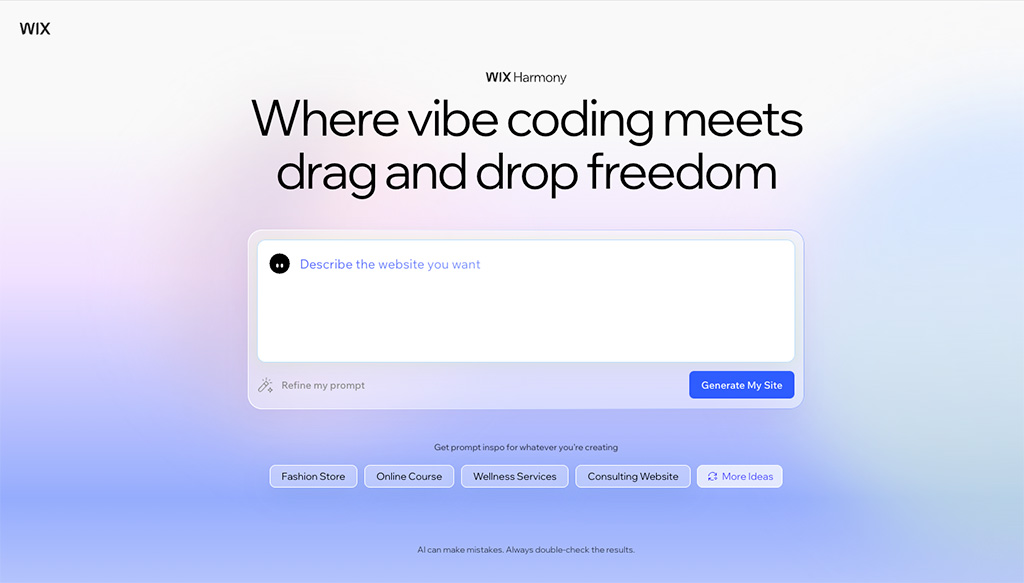
You can start with one of its many templates and customize it yourself, or use Wix’s new AI tools — Wix Aria (its AI assistant) and the Harmony editor — to generate a site for you.
When I tested the latter approach, it only took me a few minutes to produce a pretty good first draft of a website. It still needed editing before I’d have considered publishing it, but it provided a genuinely useful starting point.
Unlike most of its key competitors, Wix offers a free plan which can be used indefinitely. But because sites built with it display prominent Wix advertising and prevent you from connecting your own domain or selling products, it’s usually not appropriate for a professional project. That said, it’s a good way to test and get to grips with the platform.
Paid Wix plans start at $17 per month in the US, with ecommerce functionality becoming available on the $29-per-month Core plan.
| Wix plan and price* | Best for | Key features |
|---|---|---|
| Free — $0 | Trying Wix out | Wix-branded URL, Wix ads, limited storage, no ecommerce |
| Light — $17/month | Basic websites and portfolios | Custom domain, no Wix ads, 2GB storage, 2 collaborators |
| Core — $29/month | Small businesses and basic online stores | 50GB storage, 5 collaborators, payments, ecommerce, bookings |
| Business — $39/month | Growing businesses and ecommerce stores | 100GB storage, 10 collaborators, more advanced ecommerce and marketing tools |
| Business Elite — $159/month | Larger businesses and higher-volume stores | Unlimited storage, 100 collaborators, advanced ecommerce, marketing, and developer tools |
Founded in Israel in 2006, Wix has a large user base, with an estimated 8.92 million websites powered by the platform, of which roughly 4.4 million are ecommerce sites.
So, what are the strongest reasons to use Wix?
Advantages of using Wix
1. You get a lot of features for your money
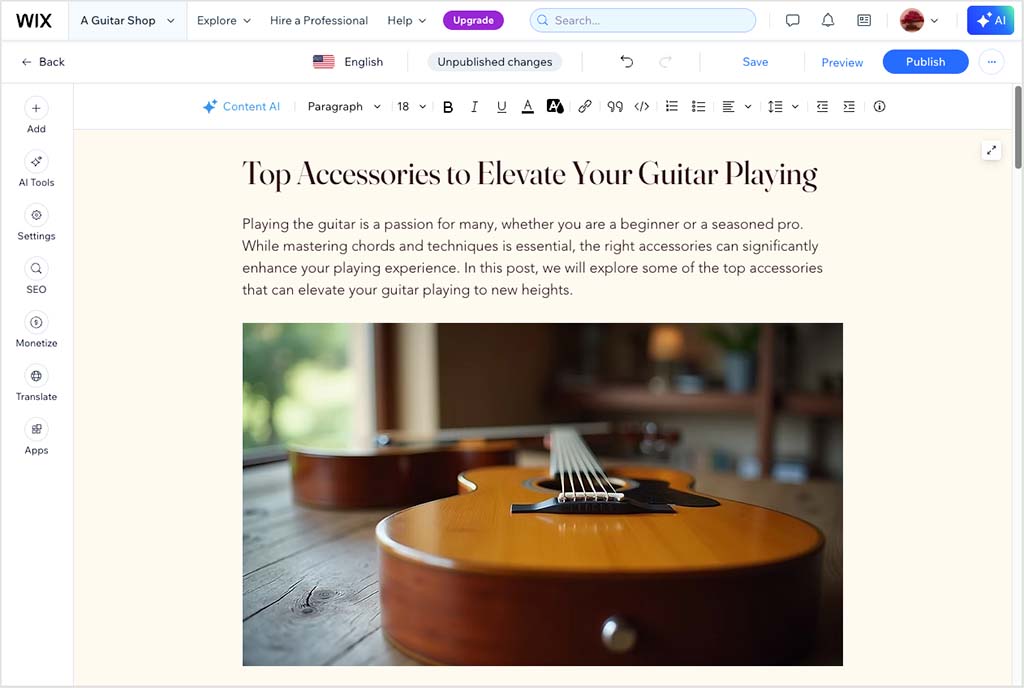
Wix’s biggest selling point is arguably the amount of functionality you get out of the box. Depending on your plan, you can use Wix to register a domain, build a content site, publish a blog, sell products, take bookings, send e-newsletters, host videos, manage galleries, and more.
It’s basically the Swiss Army knife of website builders.
With some platforms (particularly Shopify and WordPress), you can find yourself paying quite a lot extra for site components (domains, booking apps, email marketing tools, form builder plugins and so on).
Now, Wix’s built-in tools won’t always be as sophisticated as specialist alternatives, of course. But for many small businesses they’ll be perfectly adequate.
Depending on how you use it, Wix can go beyond being a website builder and act as a capable appointment booking system, email marketing tool, ecommerce solution, and even a CRM. All this makes things simpler — and cheaper.
And speaking of simpler…
2. It’s easy to use
Ease of use is another major Wix strength. Common tasks such as creating pages, adding images, editing text, setting up forms, and adding products are generally straightforward. Basically, if you already work with desktop publishing apps like Microsoft Word or design tools like Canva, you won’t really struggle with Wix.
The platform also provides plenty of assistance as you build your site. Wizards, checklists, prompts, help articles, and contextual guidance appear throughout the interface.
Its new AI tools reduce the amount of work involved further. Rather than starting with a blank website, you can describe the type of business you run and the site you want to create, and Wix will generate much of the initial structure for you. You’ll still need to think carefully about your copy, design, navigation, and SEO — but Wix removes a lot of the technical friction involved in building a website.
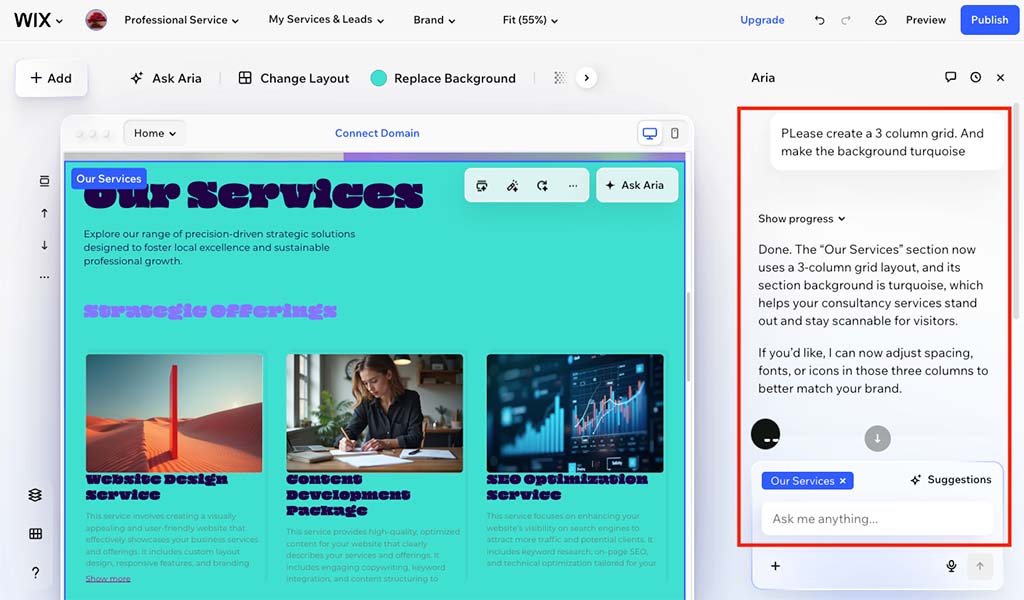
When testing its new “Harmony” editor and using its AI assistant Aria to construct a site, I put a pretty usable website together in around 15 minutes. Now, it has to be said that this needed further refinement — and of course the addition of content — but the setup process was unarguably quick.
3. You get an enormous choice of templates
Wix gives you a really wide range of templates to choose from — I counted 3,100, which is considerably more than you get from most competing hosted website builders. These templates are generally attractive, and importantly, all of them are free to use.
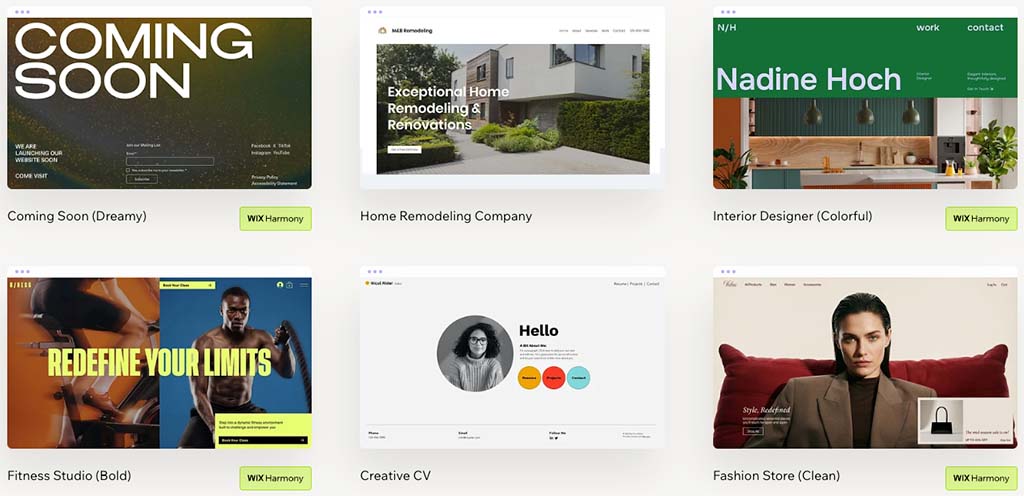
And this template range caters well for a large variety of applications — you’ll find templates aimed at restaurants, consultants, photographers, musicians, fitness businesses, online stores, events companies, and more. This means you can usually settle on a design that already contains the type of layout and page structure you need.
Naturally, the quality of the finished site will still depend heavily on the imagery, copy, and branding you add to it — but Wix usually gives you a good starting point for your project.
There is one significant catch with Wix templates, however: changing to a completely different one later isn’t easy. I’ll come back to this in a moment.
4. Its ecommerce tools are good for smaller merchants
Wix definitely wouldn’t be my first choice for a large ecommerce operation, but its selling functionality is more comprehensive than that of competing products (it outclasses Squarespace, Jimdo, and Webflow easily when it comes to ecommerce features).
It lets you sell both physical and digital products, and caters reasonably well for dropshipping too. It also works with a good selection of payment gateways, with big hitters like PayPal, Stripe, and Square all supported.
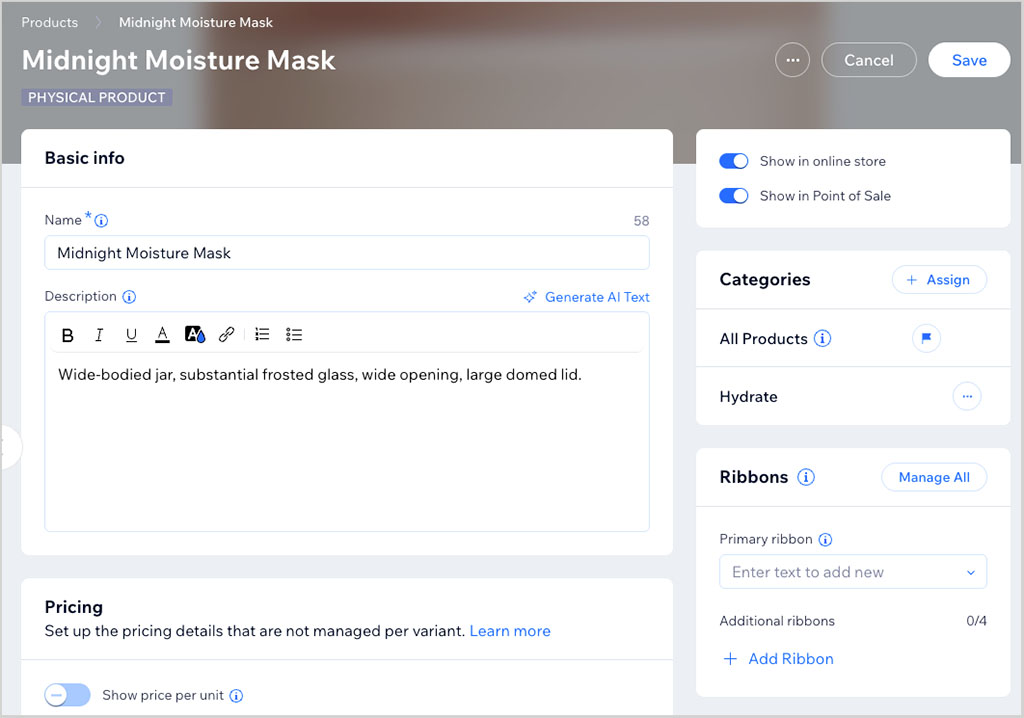
Wix lets you sell up to 50,000 physical products; these can be offered in 6 options (size, color, material, etc.) and in up to 1,000 variants of these options.
These limits compare well with those of competing solutions. Like Squarespace, Wix lets you offer up to six product options per item; for context, Shopify limits you to three (Shopify does let you buy apps that remove product option and variant limits entirely, however).
One area I found particularly straightforward was selling digital products. It’s easy to upload, sell and deliver digital files with Wix, and no extra apps are required to facilitate this — Wix handles the purchase and delivery of files such as ebooks, videos, and music out of the box. The file limit for the digital products you can sell is 1GB, which stacks up well against the limits imposed by Squarespace and BigCommerce (whose limits are 300MB and 512MB respectively).
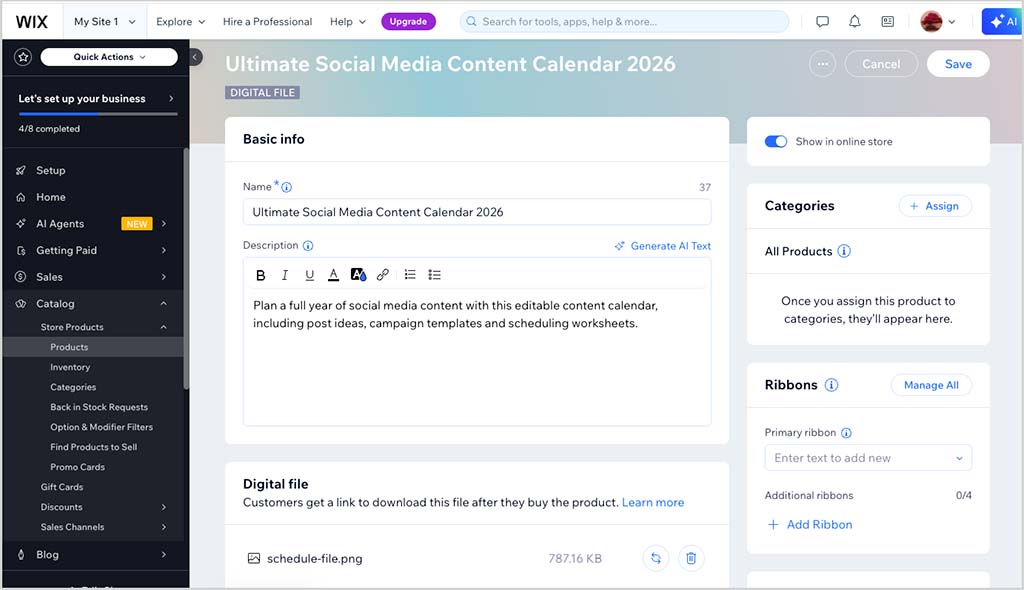
As mentioned, dropshipping is supported out of the box too, via an integration with Modalyst; print on demand selling can be facilitated through integrations with well-known POD companies like Printful and Printify.
Finally, a built-in point-of-sale system is available for Wix too, although this only works in a few countries (the US, Canada and the UK). Third-party options are available for sellers based outside these countries.
All in all, Wix performs well when it comes to basic ecommerce — but when your requirements become more sophisticated, limitations start to show. I’ll discuss this further shortly.
📚 Related resource
5. Its SEO tools are strong
Wix used to attract a bit of criticism for its SEO capabilities, but these days, its search engine optimization features are generally good.
It lets you take care of all the important SEO basics, including:
- editing page titles, meta descriptions, URLs, and alt text
- creating redirects
- modifying robots.txt files.
Wix also gives you access to a handy “SEO Assistant” tool — this aims to turn SEO into a checklist of practical tasks (rather than a process of tweaking technical settings). The SEO Assistant works in a fairly similar way to the Yoast SEO tool, and when creating test pages, I found it quite useful for making basic content optimizations.
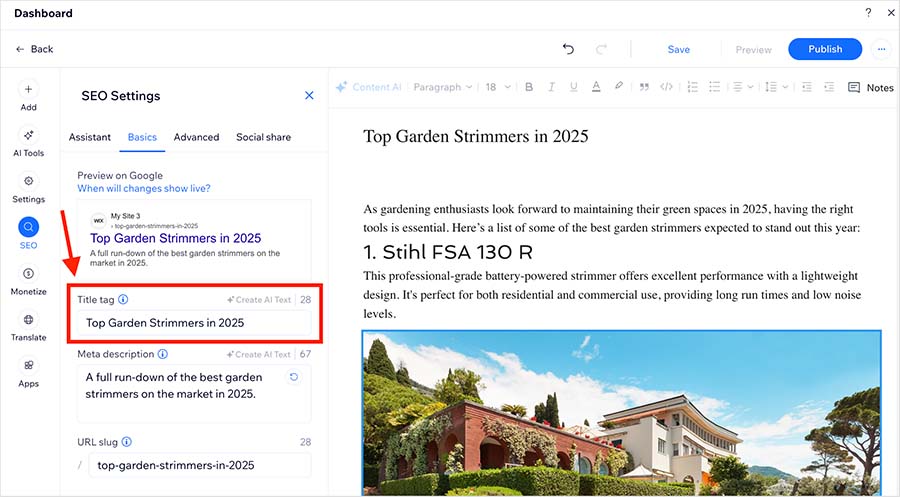
Wix also integrates neatly with Google Search Console and the SEO tool Semrush.
I particularly liked the Search Console integration: this pulls search performance data into a dedicated SEO dashboard inside Wix, making it very easy to keep an eye on organic traffic without continually switching between platforms.
Now, for a very large publishing project where SEO is central to the business model, I’d still opt for a platform offering more flexibility over technical SEO — probably WordPress.
Unlike WordPress, Wix gives you little or no say over hosting and site code, meaning that you can only optimize your SEO setup so far. But for a typical small business website, Wix gives you the core SEO tools you’re likely to need to perform well in search.
6. There’s a good range of apps available
Wix includes a lot of functionality by default, but you can add more by adding apps to your site.
Wix’s App Market gives you access to plenty of add-ons for marketing, form building, analytics, social media, customer reviews, dropshipping, print on demand, and more. When researching this review, I counted around 800 apps in it.
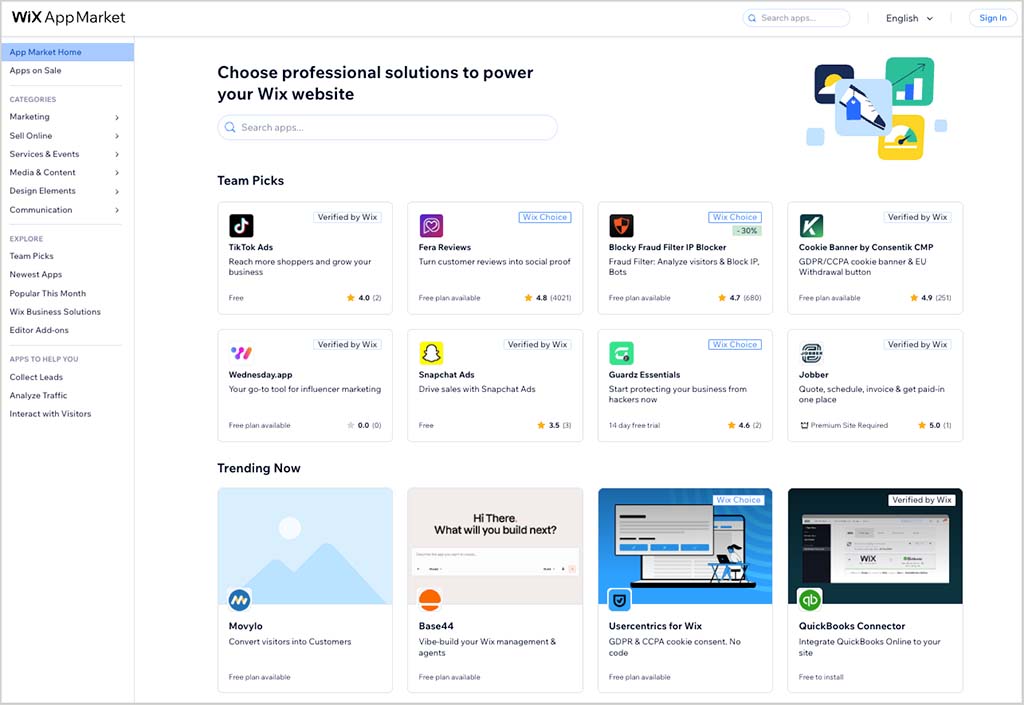
This is far less than the number of apps/plugins you’ll find available for Shopify (21,000+) and WordPress (71,000+), but far more than what you’ll find from other competing solutions like Squarespace (around 50) and Webflow (300).
In short, there are enough add-ons available for Wix to cover most key business tasks. And where a native integration isn’t available, it’s sometimes possible to add functionality by embedding an HTML widget on your site.
7. Customer support is comprehensive
Wix provides a good range of support options: in addition to phone, email, and live-chat support, you get access to a very comprehensive help center. In fact, when testing Wix, I was able to find answers to nearly everything I wanted to know simply by searching this.
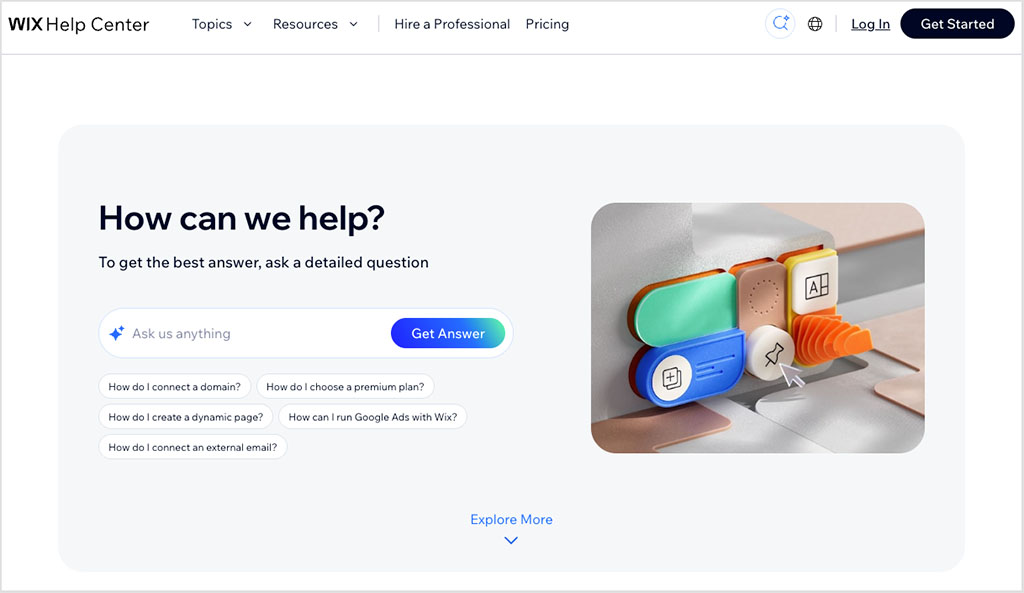
(There’s also plenty of contextual help built into the Wix interface itself.)
Phone support is available 24/7 in English, although this works through a callback system rather than a direct phone number.
I tested Wix’s email support by submitting a support question. A member of its support team responded at the start of the next business day — reasonable, although a little slower than I would have liked.
Overall, I was pretty satisfied with the help options available from Wix. For inexperienced website builders in particular, having several different ways to get help — including phone support — is reassuring. And it’s worth noting that key competing tools — including Shopify, Squarespace, and Webflow — don’t offer phone support on non-enterprise plans.
OK, so those are the key reasons you might want to use Wix. If you’d like to try it out, there’s a free plan available here.
Now let’s look at the reasons you might want to think twice about the platform.
Disadvantages of using Wix
1. It doesn’t let you switch templates
Wix’s huge template library comes with a fairly massive limitation: once you’ve built your website using a particular template, you can’t switch to another one. So, if you decide later that you want to use a completely different template, you’ll need to entirely rebuild your site.
Now, this might not matter much if you’re running a five-page brochure website. But if you’re working with hundreds of pages and blog posts, changing your overall design will turn into a significant, time-consuming project.
2. Its older editor creates complications
Wix is currently dealing with an awkward legacy issue: its Wix Editor interface.
Sites created with its new Harmony editor are fully responsive, meaning their layouts automatically adapt to different screen sizes.
Sites built with the classic Wix Editor work differently, however: they make use of a layout technique called absolute positioning. This is where page elements are positioned by pixel (rather than relative to the user’s screen). This gives you more freedom to position content exactly where you want it, but means you’ll need to create separate desktop and mobile layouts. And this means more time spent on adjusting pages for smartphones.
There’s another problem too: sites built with the classic Wix Editor can’t currently be migrated to Harmony.
Ultimately, if I were creating a Wix website today, I’d use one of its newer Harmony-based templates — it’s likely that this is the version of the platform that will receive more attention, investment, and development from Wix going forward.
3. Moving away from Wix is difficult
Wix involves a significant degree of platform lock-in. You can’t simply download the code for your entire Wix website and host it somewhere else. And Wix doesn’t give you access to the underlying CSS files either.
So, if you eventually decide to migrate to another platform, you may need to recreate much of your site manually.
When it comes to getting data out of Wix, you’re fairly limited too — you can export some product data (up to 5,000 physical products), but there’s no dedicated export option for blog posts. A workaround for exporting your text-based content is possible by copying and pasting it into another platform; this is fine for small-to-medium-sized sites, but not so good for large ones.
So, if you expect your website to grow into a very large, strategically important asset, it’s worth considering how easy it will be to leave Wix before committing to it.
4. Its ecommerce features could be better
Wix gives you enough ecommerce functionality to build a simple online store, but when it comes to selling products online, it’s not in the same league as dedicated ecommerce platforms like Shopify or BigCommerce.
The difference between Wix and dedicated store builders like these becomes really apparent as your selling requirements get more complex.
In particular, Wix’s international selling tools are less sophisticated than Shopify’s. Although eligible Wix stores can accept payments in multiple currencies, the platform doesn’t provide remotely the same depth of functionality as its competitor for managing separate markets, localized storefronts, duties, and import taxes.
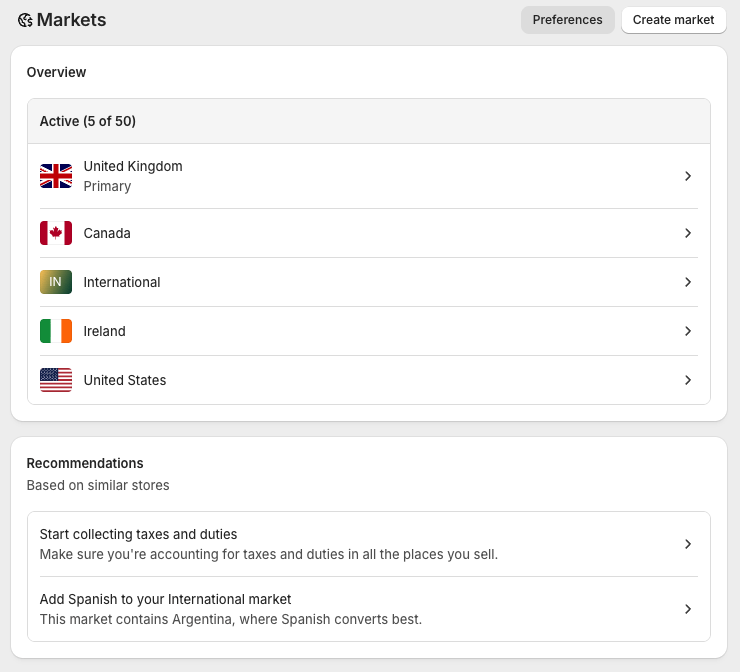
Wix places limitations on automatic tax calculation too. Ungenerous tax calculation caps apply (more on which shortly), which become restrictive as your sales volumes increase.
And finally, as I mentioned earlier, Wix’s built-in POS system only works in the US, Canada and the UK.
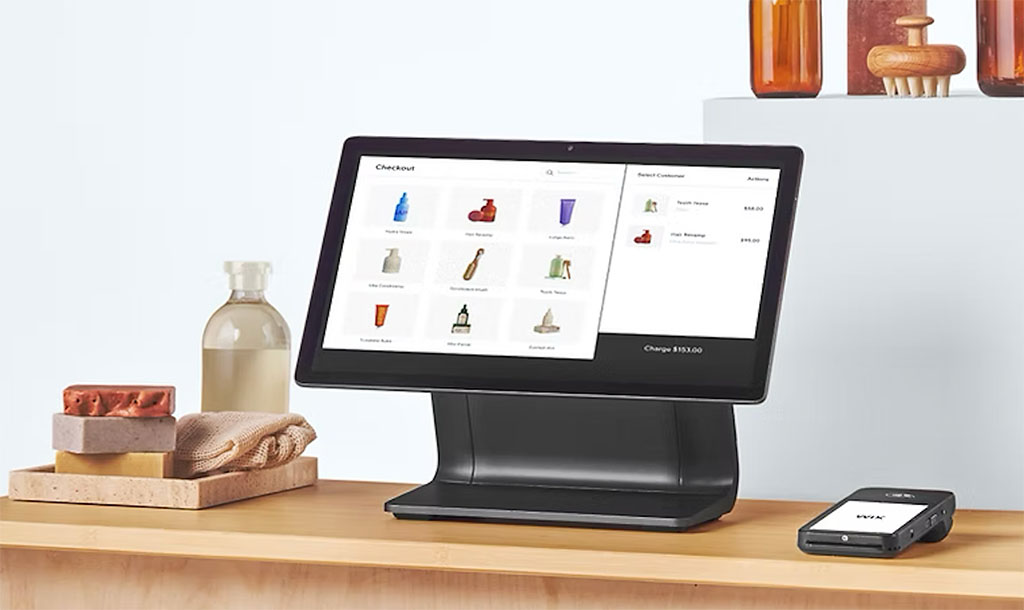
None of this is likely to trouble someone running a simple store or selling mainly in one country. But if ecommerce is the central focus of your business, and you expect to sell internationally or at high volumes — there are better alternatives available, not least Shopify.
5. Its multilingual functionality is awkward
Wix provides dedicated multilingual functionality, but only if you build your site a certain way.
At the time of writing, the Wix Multilingual app works with sites created using the classic Wix Editor, but not with sites created using Aria or edited in the newer Harmony editor.
That creates an awkward trade-off. Wix’s newest editor gives you the better, fully responsive site-building experience, but its older one is the one you need to access multilingual functionality.
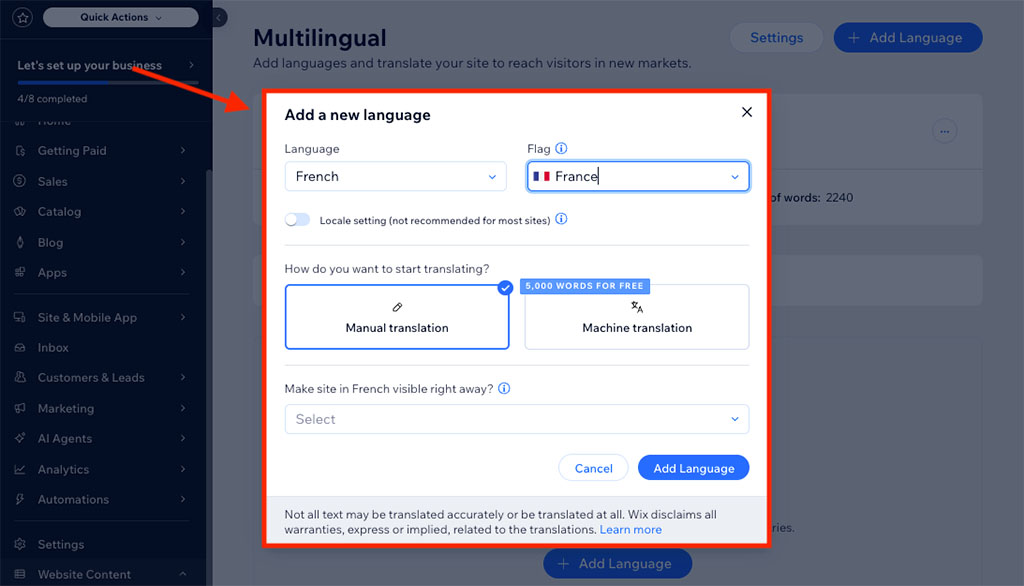
And even when you are using Wix Multilingual successfully, it won’t translate every app or feature. Examples of apps I tried whose content can’t be translated include Wix Photo Albums, Wix Video, Wix Gift Cards, Wix Forum, and Wix Site Search. Some Wix email-marketing and invoicing content can’t be translated either.
So if multilingual publishing is a key requirement, I’d look very carefully at Wix’s limitations before using it.
6. Some plan limits are unnecessarily restrictive
Wix places limits on several aspects of its paid plans that you won’t encounter from competing platforms. Depending on your subscription, restrictions can apply to storage, tax calculations, collaborators, forms, analytics, and other functionality.
When testing the platform, the limits that bothered me the most were:
- storage space (limited to 2GB, 50GB and 100GB on Wix’s Light, Core and Business plans respectively)
- dropshipping products (you can sell 25, 250 and 50,000 dropshipped products on the Core, Business and Business Elite plans respectively).
- automatic tax calculations (limited to 0, 100 and 500 transactions per month on the Core, Business and Business Elite plans respectively).
The storage space limits are annoying, especially if you’re working with large multimedia files, but probably won’t affect most users.
The dropshipping product limits are more serious, because they make it difficult to scale a dropshipping business on all but the most expensive Wix plan.
But most significant are the tax calculation limits — if you’re running a serious ecommerce operation, you are going to need to calculate tax on far more than 100 to 500 transactions per month. And despite multiple efforts, I couldn’t find out — either from Wix’s help materials or from my chats with its “Helpmate” AI assistant — what happens if those limits are exceeded.
For a straightforward business website, or a small ecommerce store, these restrictions might never cause any difficulty. But if you’re aiming to build a professional ecommerce business, they’re worth paying attention to.
Wix versus its main alternatives
Wix vs Shopify
If ecommerce is the main purpose of your site, Shopify comprehensively beats Wix.
As I discussed earlier, Wix is perfectly capable of powering a small online store, and using it instead of a dedicated store builder may actually make more sense when selling is only one part of a broader web design project.
But ultimately, Shopify gives you far more sophisticated ecommerce functionality than Wix, a much larger app ecosystem, and better tools for selling internationally. And unlike Wix, it doesn’t place limits on the number of dropshipped products you can sell or tax calculations you can make.
Our video comparison below spells out the key differences between Wix and Shopify.
So I’d choose Wix for a small business site that happens to include a store, but Shopify for a business where the store is the site.
📚 Related resources
Wix vs Squarespace
Wix and Squarespace compete much more directly. Both are aimed heavily at small businesses and individuals, and both make it relatively easy to create a polished site without coding.
Wix’s main advantages are its broader feature set, larger template selection, app ecosystem, and stronger ecommerce functionality.
Squarespace, however, is a very attractive option for building content-led sites. It places more emphasis on polished design and simplicity, and its layouts are (in my view anyway) considerably more attractive than the Wix equivalents. I’ve always found Squarespace easier to use than Wix, and its interface faster (Wix Editor in particular can be very sluggish sometimes).
To get a sense of how Squarespace works, I’d suggest watching the below video, in which we walk you through how to build a small business website with the platform.
So if you want maximum built-in functionality, I’d lean toward Wix. If your priority is creating an elegant content or portfolio site with a lovely editing experience, Squarespace is worth considering.
📚 Related resources
Wix vs WordPress
Wix’s biggest advantage over WordPress is simplicity. With Wix, hosting, security, updates, design tools, and much of the functionality you need are all provided in one place. This is not the case with WordPress, where you typically have to manually stitch various services together (software, hosting, ecommerce plugins, etc.) to build a site.
The trade-off is control. Wix isn’t ideal if you want access to your website’s underlying code, complete say over hosting and SEO, and the option to migrate your site elsewhere. WordPress, being an open-source, self-hosted platform, gives you all of this.*
For a typical small-business owner, Wix’s convenience can be invaluable. For somebody who is building a very large content site, and has particularly bespoke requirements, WordPress is usually the better option.
*Note: there is also a paid hosted version of WordPress that, like Wix, offers a more “all-in-one” solution. But building with it still generally requires more configuration time, and it isn’t quite as intuitive to use.
📚 Related resource
Final verdict
Overall, Wix is a strong website builder that offers particularly good value to small businesses and individuals.
Its biggest advantage is the way it combines an easy website-building experience with a broad collection of useful business tools. For a relatively modest monthly fee, it lets web design novices build a professional website, publish a blog, take appointments, run an online store, collect leads, and handle marketing — using just one platform. And its AI-powered site-building tools — which speed up the build process considerably — further enhance its appeal to beginners.
So I’d strongly consider Wix for small-business websites, portfolio sites, service businesses, and relatively straightforward online stores.
I’d be much more cautious about using it for anything you want to scale up, however. If you’re looking for a website building solution to handle a large publishing project, a multilingual website, or an international ecommerce business, there are much stronger alternatives out there.
For serious ecommerce projects, I’d choose Shopify — it’s a highly scalable platform that works well for beginners too. For a large publication site, I’d be inclined to go with WordPress (so long as you have the technical know-how or developer support to set it up properly).
But if your priority is simply to get an attractive, functional business website online without much technical hassle, Wix is a very solid choice. I’ll leave you with a summary of Wix’s key pros and cons, and if you have any questions, just leave them in the comments.
Wix pros and cons summary
| Wix pros | Wix cons |
|---|---|
| Good value for money | You can’t easily switch templates |
| Easy to use | The older Wix editor doesn’t produce responsive websites |
| Huge range of attractive templates | Moving a Wix site elsewhere is difficult |
| Good ecommerce tools for smaller merchants | Ecommerce features are relatively basic |
| Strong SEO functionality | Multilingual functionality isn’t available in the newer editor |
| Comprehensive customer support | Some storage and plan limits are restrictive |
Overall rating: 4/5
Wix review FAQs
Is Wix a good website builder?
Yes. Wix is a good website builder for small businesses, freelancers, creatives, and individuals who want an easy-to-use, all-in-one platform. It gives you website-building tools, blogging, ecommerce, appointment booking, email marketing, galleries, and more in one subscription.
Where is Wix based?
Wix is an Israeli company. It was founded in 2006 in Tel Aviv by Israeli developers Avishai Abrahami, Nadav Abrahami, and Giora Kaplan.
Who is Wix best for?
Wix is best suited to small businesses, freelancers, consultants, creatives, service businesses, and merchants running small online stores. It is particularly appealing to people who want to build and manage a professional website without hiring a developer.
Who should avoid Wix?
Wix isn’t particularly suitable for very large content sites, sophisticated multilingual websites, and high-volume or international ecommerce businesses. For these types of projects, WordPress or Shopify will generally give you more flexibility and room to scale.
Is Wix free?
Yes. Wix offers a free plan that you can use indefinitely. However, free Wix sites display Wix advertising, use a Wix-branded web address, and can’t accept online payments, so the free plan is mainly useful for trying the platform out rather than running a professional website.
How much does Wix cost?
Wix paid plans range from $17 to $159 per month in the US. Ecommerce functionality becomes available on the $29-per-month Core plan, while more expensive plans provide additional storage, collaborators, ecommerce functionality, and other business features.
Is Wix easy to use?
Yes. Wix is designed for people without coding or web development experience, and common tasks such as creating pages, adding images, editing text, building forms, and adding products are straightforward. Its newer Harmony editor and Aria AI assistant can also generate much of the initial structure of a website for you.
Is Wix good for ecommerce?
Wix is good for relatively straightforward ecommerce projects. It facilitates the sale of physical and digital products and provides features for dropshipping, multi-currency selling, and point-of-sale functionality. However, its international selling and scaling features are less sophisticated than those provided by dedicated ecommerce platforms such as Shopify.
Is Wix good for SEO?
Yes. Wix provides the main SEO features most small businesses need, including editable page titles, meta descriptions and URLs, redirects, alt text, robots.txt controls, and integrations with Google Search Console and Semrush. However, WordPress provides more control over hosting, code, and technical SEO for larger publishing projects.
Can you change Wix templates after publishing a site?
No. Once you have built a Wix website using a particular template, you can’t simply switch it to a different template. If you want to use another design, you generally need to rebuild the site, which can be a significant disadvantage for larger websites.
Are Wix websites mobile responsive?
Sites built with Wix’s newer Harmony editor are fully responsive and automatically adapt to different screen sizes. Sites created with the classic Wix Editor use separate desktop and mobile layouts instead, which can result in additional work to optimize a website for smartphones.
Can you move a Wix website to another platform?
Not easily. Wix doesn’t let you download your complete website code or CSS and host it elsewhere, so migrating to another platform can involve manually rebuilding significant parts of it. Export options for data and content are also limited.
Is Wix good for multilingual websites?
Wix’s multilingual functionality has some significant limitations. The Wix Multilingual app currently only works with the classic Wix Editor (rather than the newer Harmony editor), and some Wix apps and features can’t be fully translated.
Is Wix better than Shopify?
Wix is generally better when you need an all-purpose business website that also includes some ecommerce functionality. Shopify is the much stronger choice when ecommerce is the main purpose of the site, and is in particular far better for high-volume or international selling.
Is Wix better than Squarespace?
Wix is generally stronger for built-in functionality, ecommerce, apps, and template choice. Squarespace may be the better option if your priority is a highly polished content or portfolio site; it’s also easier to use.
Is Wix better than WordPress?
Wix is easier to set up and manage than WordPress because hosting, security, updates, and website-building tools are provided in one place. WordPress requires more configuration but gives you substantially more control over hosting, code, SEO, customization, and moving your site between providers.
What are the main disadvantages of Wix?
The main disadvantages of Wix are its inability to let you change templates, a difficult migration process, limitations associated with its older editor, relatively basic ecommerce functionality, awkward multilingual setup, and restrictions on some plan features and resources.

Comments (15)