

We have an honest review policy, but this page contains affiliate links. If you buy through these, we may earn a commission. This helps fund our research at no cost to you.
In this post I’m going to compare Semrush vs Raven Tools — two solutions that claim to give you all you need to create an effective SEO campaign, yet come with very different feature sets and pricing. Which one is right for your business?
Quick verdict
Semrush beats Raven Tools in nearly every respect. It gives you more data, better analysis, and crucially a much wider feature set than Raven Tools — one that includes market-leading AI visibility tracking, keyword research tools, SERP feature insights and site audits.
Raven Tools only really makes sense if you don’t have much budget and your core requirement is rank tracking — its rank tracking limits are considerably more generous than Semrush’s, and its pricing is a lot lower.
Getting started with Semrush or Raven Tools
I’ll kick my full comparison off with a quick look at the background of Semrush and Raven Tools.
Semrush and Raven Tools: a bit of background
Founded in 2008, Semrush started as a fairly basic SEO tool, but has since become a leading digital marketing platform that has over 117,000 paying subscribers (source: Semrush Q3 2025 Financial Report). It now provides a wide range of features that cover not just SEO but AI visibility, content marketing, PPC, social media and competitive research tools. This ‘all-in-one’ approach makes the tool popular with agency customers.
Raven Tools, which has been around since 2007, offers a more cut-down feature set that focuses more on ‘core’ SEO features (like site audits, keyword research, backlink tracking and report creation). Because it can be used more cheaply than Semrush, the platform tends to be popular with small to medium-sized businesses on a low budget.
Now, let’s break down what each tool brings to the table.
I’ll begin by taking a look at the key things that Semrush does better than Raven Tools, before moving on to the key areas where Raven Tools wins.
Reasons to use Semrush over Raven Tools
1. Semrush gives you a much better ‘domain overview’ feature
Getting an at-a-glance picture of how authoritative a domain is, the key phrases it ranks for and the amount of traffic it receives lets you understand how well your SEO strategy is working, or how good your competitors are at SEO.
And Semrush is much better at giving you this picture than Raven Tools.
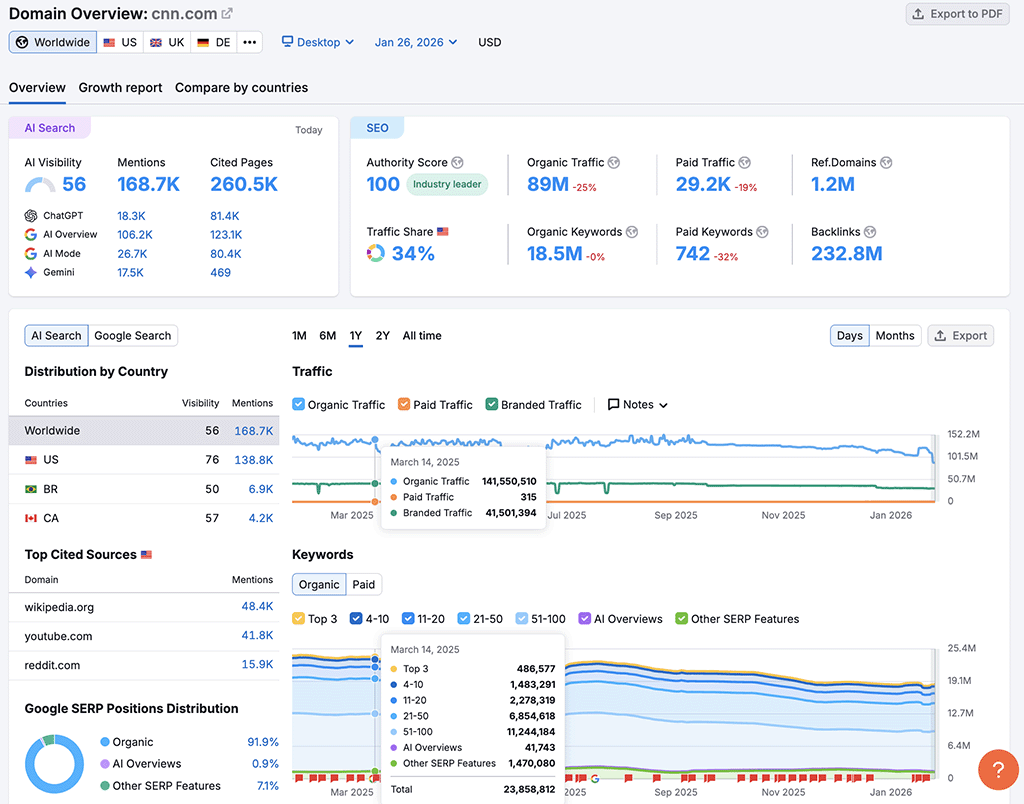
As soon as you enter a website’s URL into Semrush’ domain overview section, you’re presented with a comprehensive snapshot of its overall online visibility — covering both AI-driven search performance and traditional SEO metrics.
And at the top of this report, Semrush now displays a dedicated AI visibility panel, which shows how well a domain is performing across major AI-powered search and answer platforms (ChatGPT, Google AI Overviews, Google AI Mode, and Gemini).
This panel gives you insight into:
- a domain’s overall visibility and prominence across AI-powered search platforms and large language models (LLMs)
- how often a brand is mentioned in AI-generated answers
- how frequently individual pages are cited as sources by AI systems
Alongside this AI visibility data, Semrush provides a detailed SEO performance panel, which gives you:
- an ‘Authority Score‘ — a metric that gives you a quick sense of the domain’s overall SEO strength, and how easy it will be to rank content published on it
- organic and paid search traffic estimates — these let you understand how much traffic a site is getting from both organic searches and paid campaigns
- total backlinks — how many web pages are linking to the domain
- traffic share by country data — where a site’s audience is coming from
- top SERP features — which search engine result page features are associated with the domain (rich snippets, people also ask queries, star ratings and so on)
- keywords by intent — the proportion of a site’s ranking keywords that are informational, navigational, commercial and transactional
- branded vs non-branded traffic — the split between traffic coming from branded searches versus generic ones
- main organic competitors — a list of the key sites that are competing for similar keywords
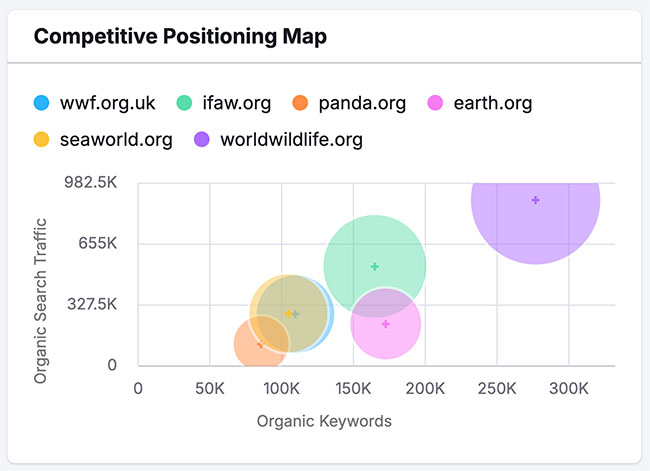
- a ‘competitive positioning map‘ — a ‘bubble graph’ showing you where a domain stands relative to its competitors.
By contrast, Raven Tools provides a far more limited, ‘traditional’ domain overview dashboard; this provides access to only a narrow set of high-level metrics, such as domain authority scores (sourced from Moz), basic backlink counts and site speed data.
Significantly, Raven Tools provides no AI visibility reporting whatsoever, meaning you get no insight into how a brand is being mentioned, cited or described across AI-powered search and answer platforms — increasingly important channels for online discovery.
You also won’t find many of the deeper SEO insights that Semrush includes as standard, like detailed traffic estimates, keyword intent breakdowns, competitive positioning maps or comprehensive SERP feature analysis. As a result, Raven Tools’ domain overview delivers a much less holistic picture of a site’s overall search visibility.
Furthermore, use of Raven Tools’ domain overview feature is strictly limited to the number of ‘campaign slots’ that come with your plan. (Raven Tools’ entry-level plan limits you to just two campaign slots; this rises to 320 campaigns on its most expensive plan.)
This restriction will quickly become a headache if you’re managing multiple sites, or need to conduct extensive competitor research.
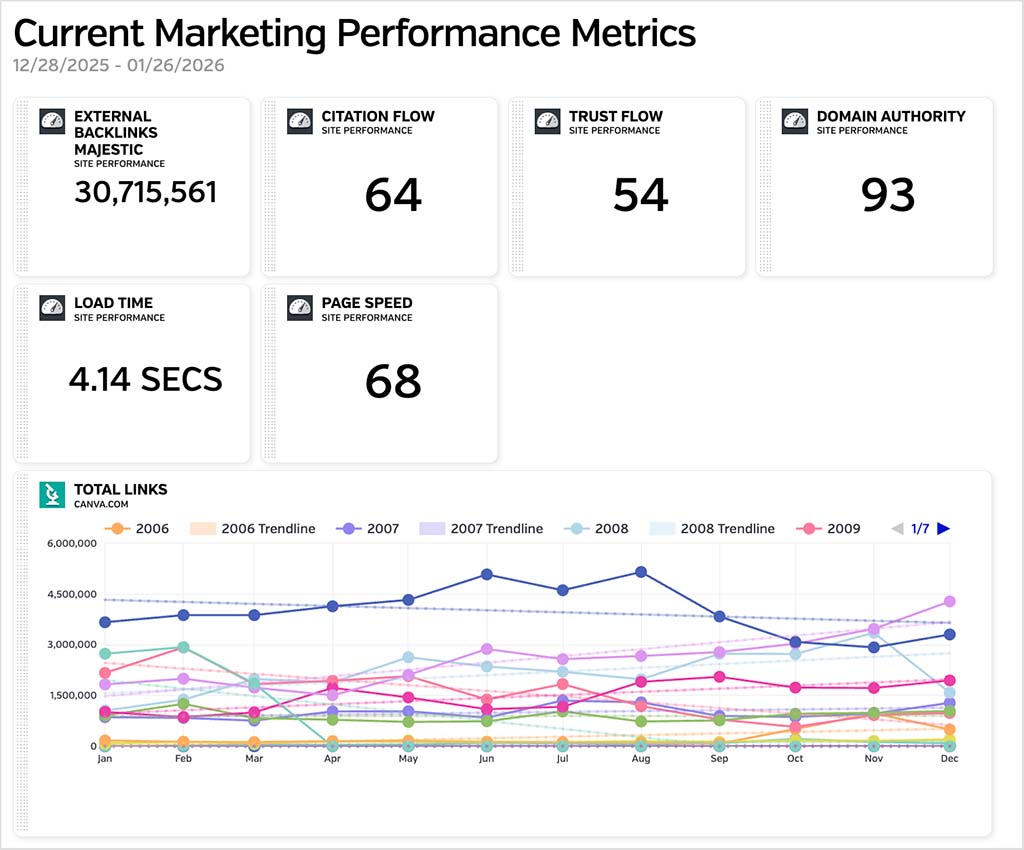
Semrush, by contrast, is much more generous here — you can research as many sites as you like with its domain overview tool, so long as you don’t exceed your daily reporting limit. As this limit varies from 3,000 to 10,000 reports per day depending on plan, this gives you enormous scope for conducting domain analysis.
In short, when it comes to getting domain overviews, Semrush gives you far more data, and lets you analyze many more domains.
2. Semrush’s keyword database is much bigger
Semrush boasts a staggering 27.9 billion keywords in its keyword database. This vast repository means you’re more likely to uncover those niche long-tail keywords that can give you a competitive edge in SEO.
For example, when researching a popular term like ‘Amazon,’ Semrush provided me with 8 million keyword suggestions; for ‘eBay’, I got 2.8 million keyword suggestions from the tool.
This breadth of data in Semrush allows for an extremely deep dive into keyword variations, search intent and potential content ideas.
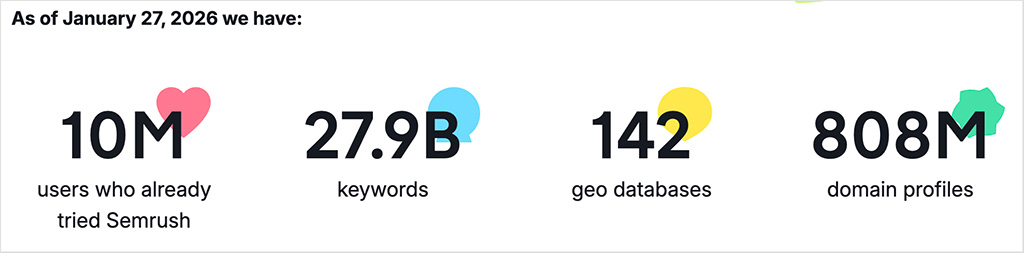
By contrast, Raven Tools provides access to 1.25 billion keywords, primarily sourced from Moz. While that’s a respectable number, it pales in comparison to Semrush’s offering.
As for Raven Tools, in my keyword research tests, it only ever returned a handful of keyword suggestions per search, even for popular brand names! (See my screenshot below).
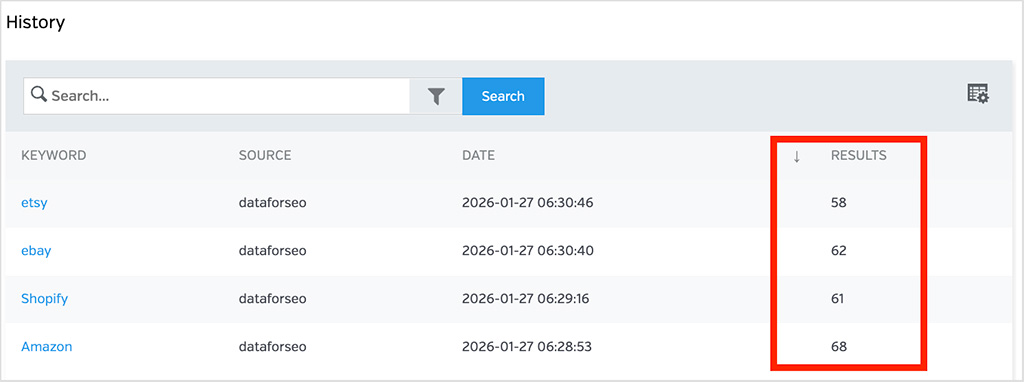
Not only that, but it’s actually really hard to find the keyword suggestion feature in Raven Tools. Inexplicably, it’s buried in the tool’s rank tracking features menu (a couple of navigation levels deep) rather than being located in the more appropriately named ‘Keyword Research’ section. It took me ages to work out where it was.
So overall, it’s a big win for Semrush when it comes to keyword research tools — its keywords database is much bigger, and based on my tests, better too. And it’s much easier to locate and use!
3. Semrush gives you keyword difficulty scores
Understanding how challenging it will be to rank for a particular keyword is crucial in SEO. Accordingly, SEO tools typically give you a ‘keyword difficulty’ metric that lets you immediately know how hard it will be to rank for the phrases you’re researching.
But when you enter a phrase into Raven Tools’ keyword research tool, you don’t get one. You’ll encounter some other ‘keyword info’ metrics, like how many people search for your chosen phrase per month, or how many times it appears in anchor text, but unlike Semrush, and indeed just about every other SEO tool I’ve tested, there’s no sign of a keyword difficulty score in Raven Tools.
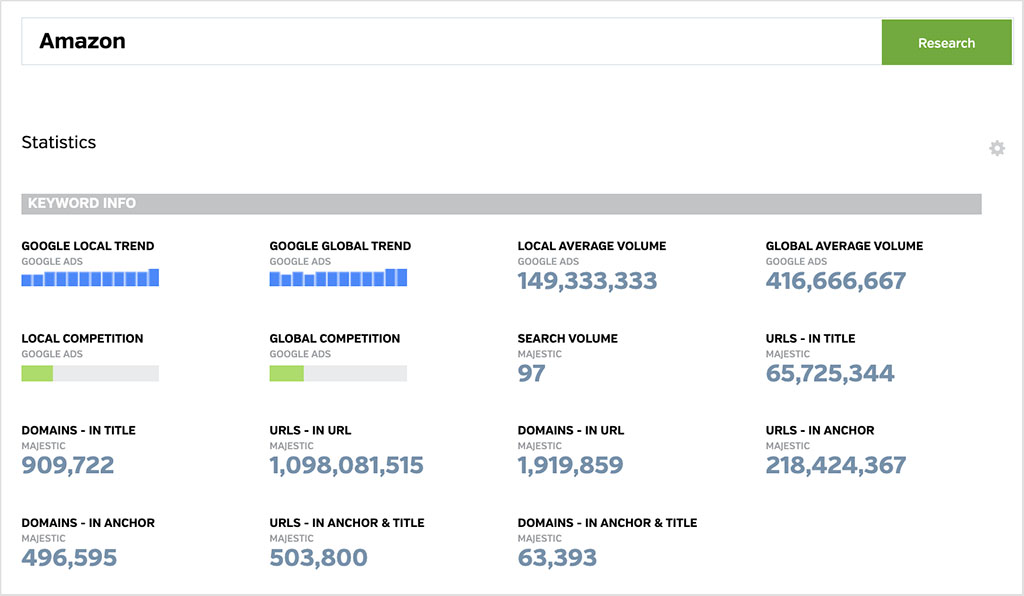
The strange thing is that it is actually possible to access some keyword difficulty information elsewhere in Raven Tools — but only for related keywords and not the actual phrase you’re researching! These are accompanied by a ‘competition score’ metric, which is sourced from the Majestic SEO platform (a value of between 0 and 1 lets you work out how hard it will be to rank for the keyword suggestions provided).
By contrast, Semrush provides clear keyword difficulty scores, on a scale from 0% (very easy) to 100% (very hard), and displays them prominently the moment you enter a phrase into its ‘Keyword Overview’ tool. This helps you to prioritize which keywords to target — and easily.
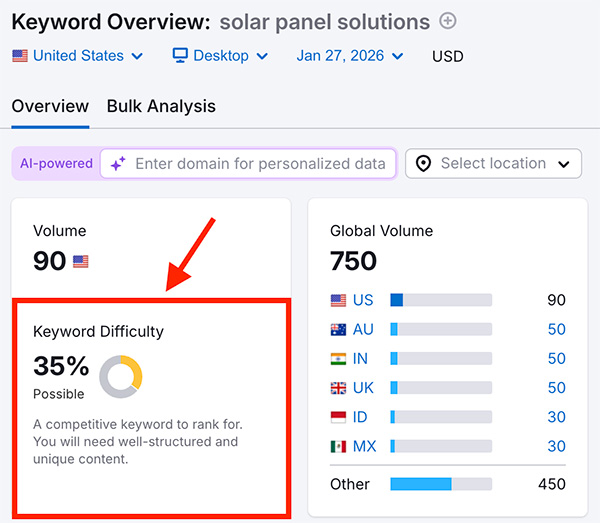
Furthermore, the keyword difficulty data that Semrush gives you is particularly insightful, thanks to the recent introduction of a new, AI-powered ‘personalized’ keyword difficulty score. Semrush calculates this by looking not just at the keyword but your domain too; based on its topical authority for the phrase you’re researching and its overall strength (in terms of backlink profile etc.), it will calculate how hard it will be for your specific site to rank for the keyword in question.
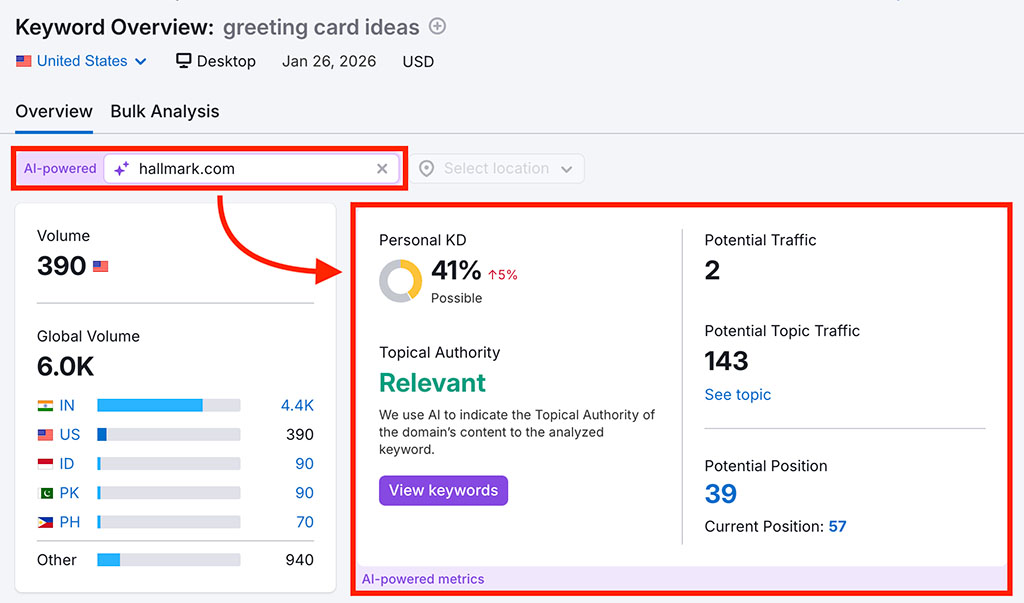
This is a pretty unique feature and one I have yet to come across while testing competing SEO platforms.
Ultimately, Raven Tools’ lack of keyword difficulty data, along with the high-quality provision of it by Semrush, is one of the strongest arguments for choosing Semrush.
4. Semrush’s site auditing tools are more powerful
When it comes to assessing the technical SEO side of things, Semrush lets you perform an extensive audit on your site involving around 150 different checks. These let you identify — and fix — key technical SEO problems on your site (slow-loading content, duplicate content, broken links, SSL errors etc.). When issues are identified, excellent contextual help is provided to help you fix them.
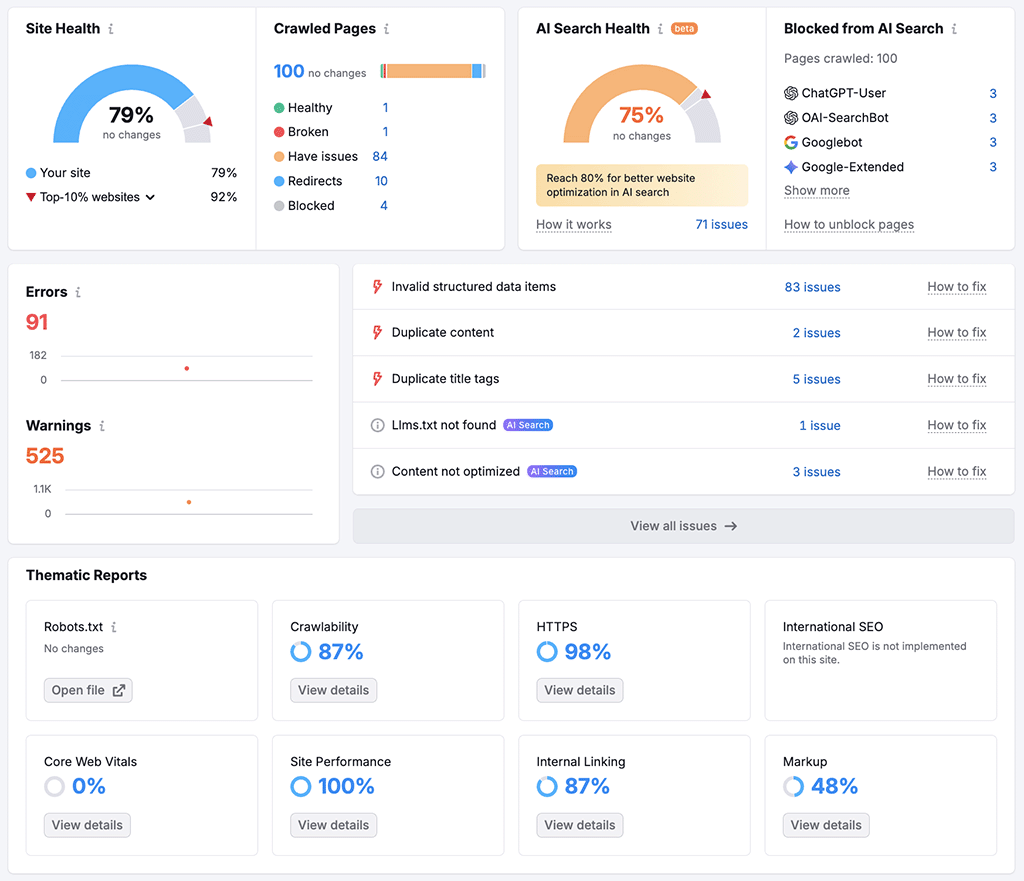
More recently, Semrush has also expanded its auditing features to reflect the growing importance of AI-driven search: it’s introduced AI search health indicators that help you assess how well your site is positioned to perform in AI-generated answers and LLMs.
Raven Tools lets you carry out site audits too — but they’re much more limited in scope, encompassing just 17 checks on your site. And instead of providing in-app help on how to fix any issues found, you are referred to the Google Search Central website for help.
5. You get traffic estimates from Semrush
Semrush provides you with detailed traffic estimates for websites, including:
- organic search traffic
- paid search traffic
- branded traffic
- traffic share by country.
Now it has to be said that Semrush’s traffic estimates are not always terribly accurate — based on testing five websites that I have access to traffic data on, I found Semrush’s estimates to be 83% off the mark on average (that said, it was more accurate where higher-traffic sites were involved).
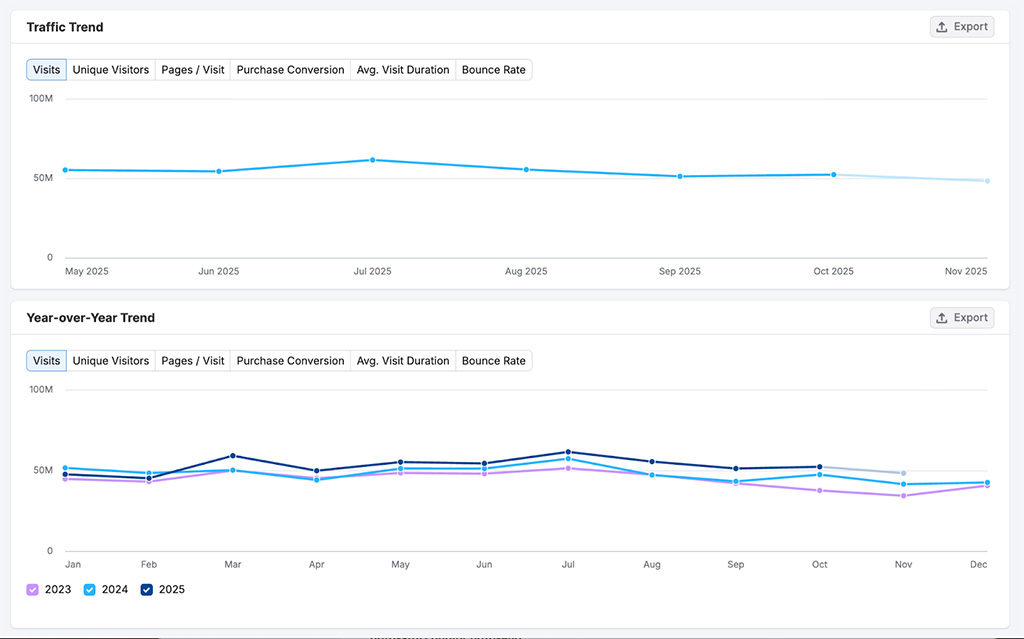
That said, Semrush’s traffic data is still useful for spotting trends and anomalies — for example, it lets users see when a site has likely been hit by an algorithm update, when a competitor has increased ad spend, or when seasonal demand is shifting.
(In competitive analysis, directional change often matters more than absolute precision.)
By contrast, Raven Tools doesn’t provide traffic estimates at all — which means you miss out entirely on this layer of competitive insight and performance context.
6. Semrush gives you comprehensive SERP feature reporting
Unlike Raven Tools, Semrush provides detailed SERP feature reporting, indicating whether features like featured snippets, knowledge panels, or ‘People Also Ask’ boxes appear for specific search queries.
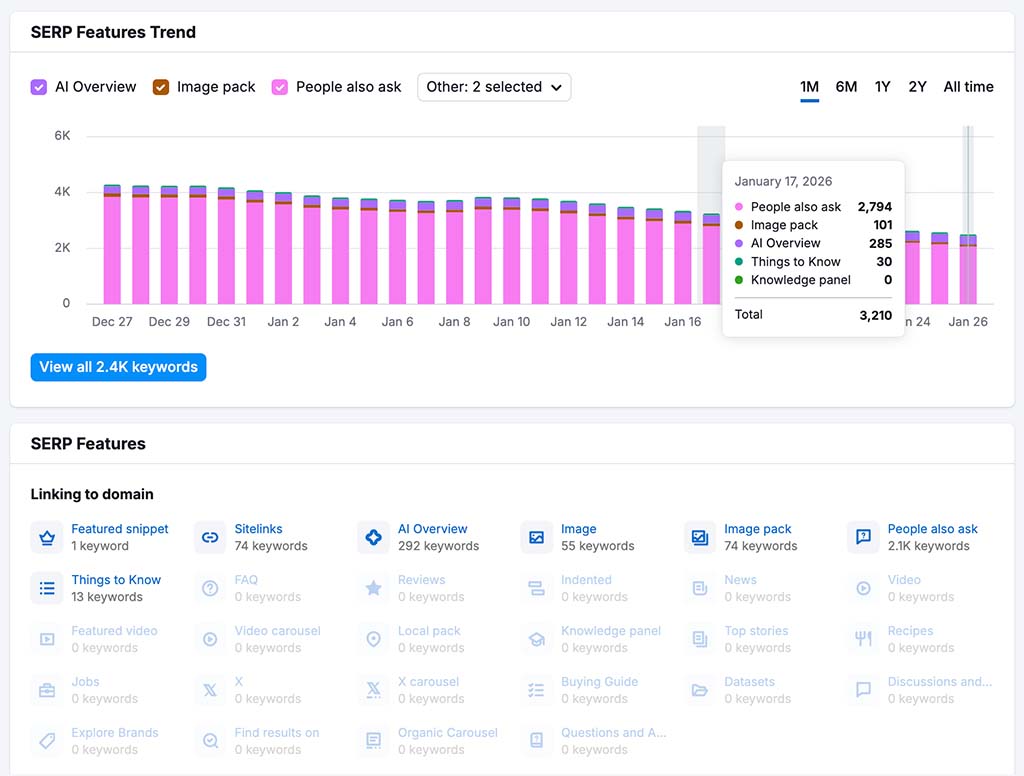
This information is helpful, because optimizing for these features can dramatically increase your visibility and click-through rates in search results.
For instance, if you know that a particular keyword triggers a featured snippet, you can structure your content in a way that might help you capture that spot.
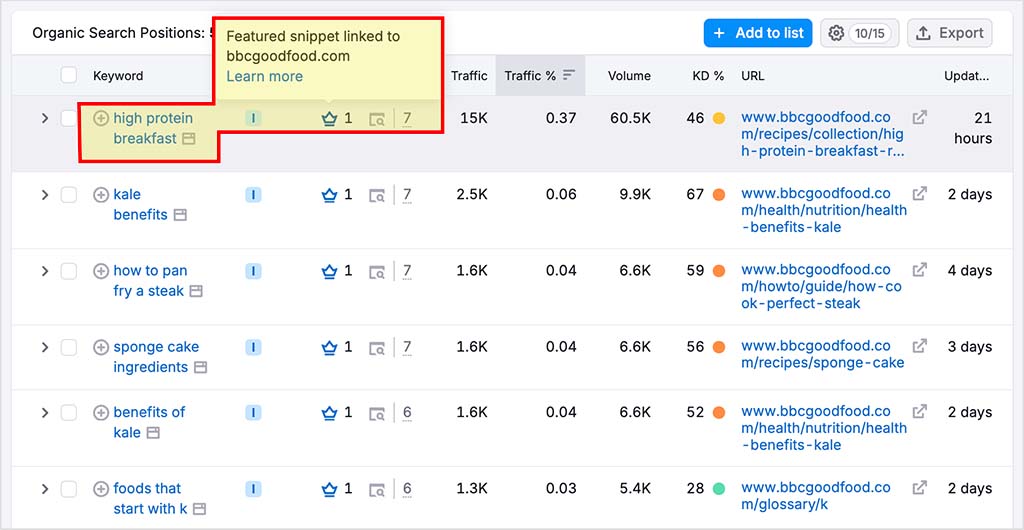
More recently, Semrush has also expanded this reporting to include Google’s AI Overviews, showing you when your site features in AI-generated answers (see screenshot below).
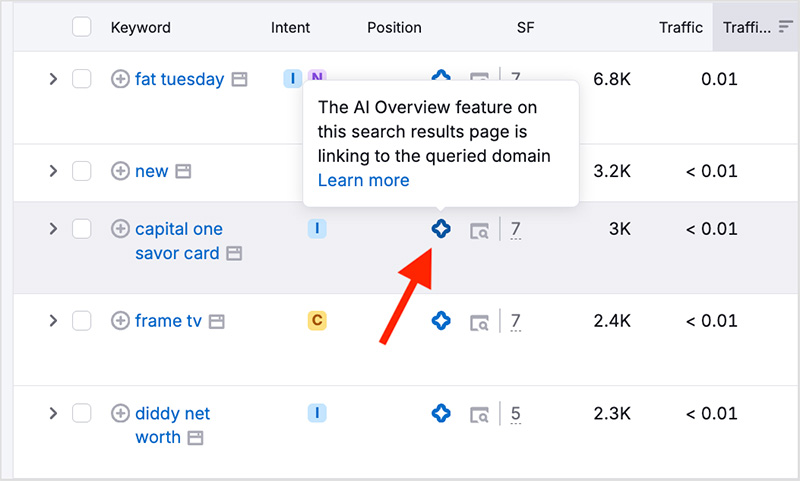
This makes it much easier to understand how your content is being surfaced in AI-powered search — and to identify opportunities to improve your chances of being selected as a cited source.
Unfortunately, Raven Tools doesn’t offer much in the way of SERP feature reporting, apart from indicating if an image is displayed in search results.
7. Semrush provides detailed ‘search intent’ data
When you ask Semrush for keyword suggestions, it classifies them by search intent, allowing you to filter them using four key categories:
- Informational = the user wants to find a specific answer to a question
- Commercial = the user wants to investigate brands or services
- Navigational = the user wants to find a particular page or website
- Transactional = the user wants to complete an action (i.e., a purchase or other conversion).
For example, filtering keywords in Semrush using the ‘commercial’ option helps you focus on keywords used by people researching products or services before making a buying decision. And choosing the ‘transactional’ option allows you to target keywords that are more likely to result in a quicker purchase.
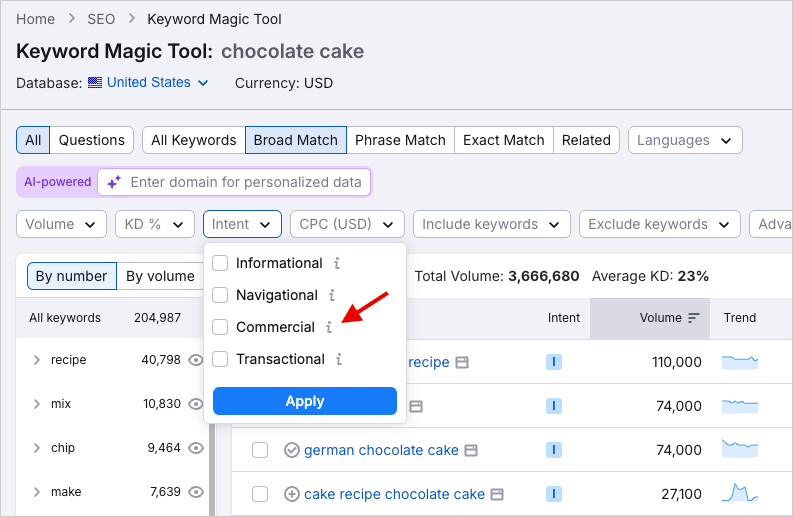
By understanding the intent behind keywords, you can tailor your content to meet the user’s needs, improving engagement and conversion rates. Search intent data also helps you to avoid targeting the wrong type of keywords in the first place.
Raven Tools doesn’t provide search intent data at all, making it more challenging to create content that aligns with what users are truly seeking.
How to get an extended free trial of Semrush
The standard free trial of Semrush lasts seven days — however, for a limited time, Style Factory readers can access an exclusive, double-length one.
8. Semrush provides better data visualization
SEO data can be overwhelming. But Semrush makes it much easier to understand by presenting it through intuitive graphs, charts and interactive visuals.
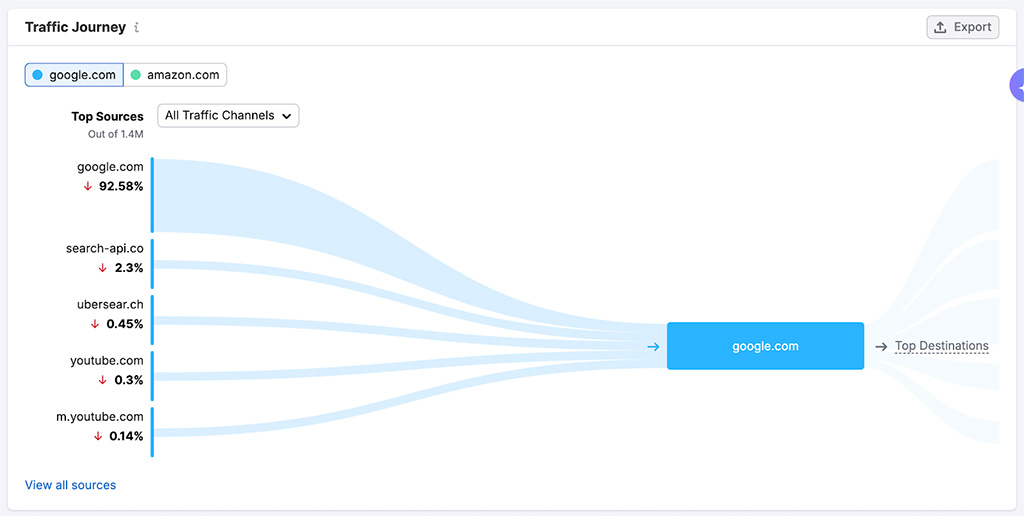
Whether you’re analyzing keyword trends over time, tracking your backlink growth, or monitoring competitor movements, these nicely-designed visuals make it easier to digest and act upon the data.
By contrast, Raven Tools relies heavily on tables and lacks robust data visualization. This can make it harder to spot trends or anomalies quickly, potentially slowing down your decision-making process in your SEO workflow.
9. Semrush helps you understand the impact of search engine updates
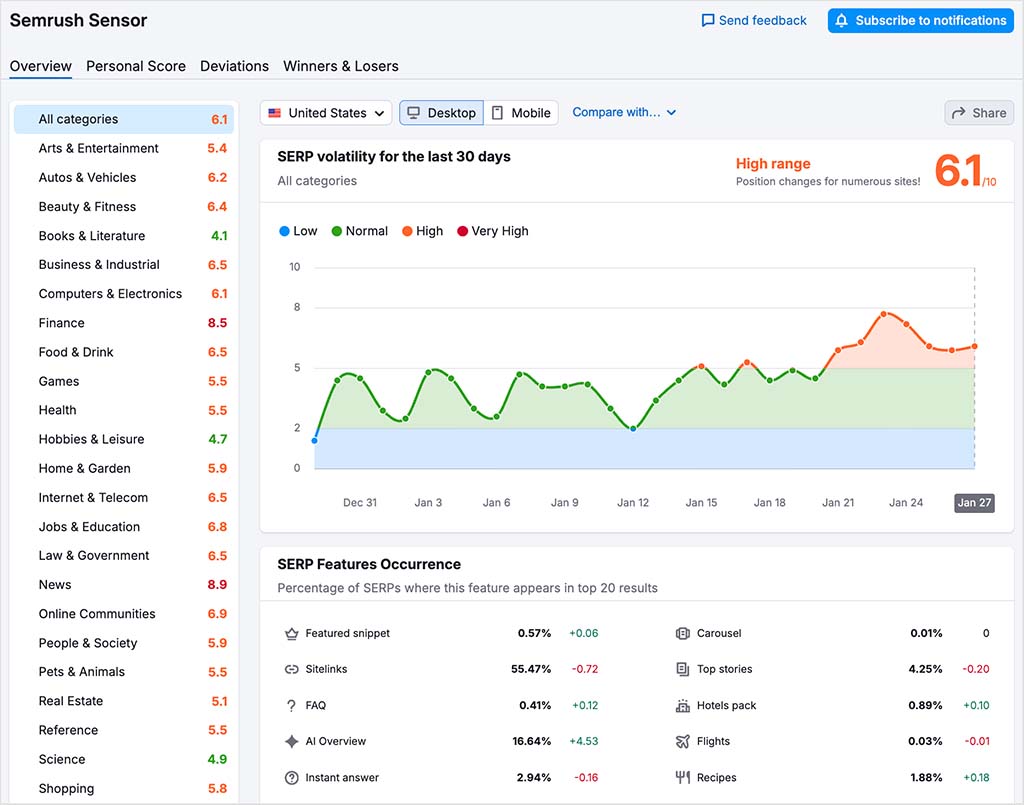
Search engine algorithms (especially Google) are notorious for their frequent updates, which can cause massive fluctuations in rankings. To help make you aware of these — and hopefully navigate them better — Semrush includes a SERP volatility tracking tool. Called ‘Semrush Sensor’, this monitors the volatility of search results and alerts you to significant changes in Google’s behavior.
But Raven Tools doesn’t offer SERP volatility monitoring at all, potentially leaving you blindsided by sudden shifts in the SERP landscape.
Additionally, Semrush plots Google algorithm updates on its organic keywords trend graph, allowing you to correlate changes in your site’s performance with them. This means that if you notice a dip in traffic on a date that coincides with a known algorithm update, you can delve deeper to understand and address the issues.
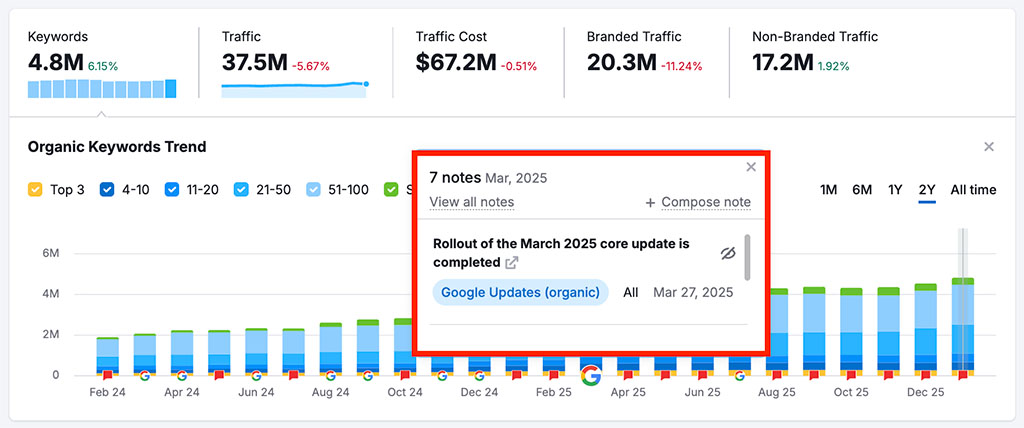
Again, Raven Tools doesn’t provide any of this sort of information, which can leave you in the dark about the reasons behind sudden drops in traffic and keyword rankings.
10. Semrush comes with a host of AI-powered features
Since the arrival of ChatGPT in late 2022, artificial intelligence (AI) has introduced new levels of automation and efficiency across countless industries. And Semrush has emerged as one of the most proactive platforms when it comes to embedding AI directly into its SEO workflows.
The platform leverages AI through features like personalized keyword difficulty scores, topical authority ratings and — my personal favorite — its keyword strategy tool.
Semrush’s ‘Keyword Strategy Builder’ tool analyzes keyword intent and domain relevance, automatically grouping keywords into meaningful clusters and suggesting a hierarchy of pillar pages and subpages.
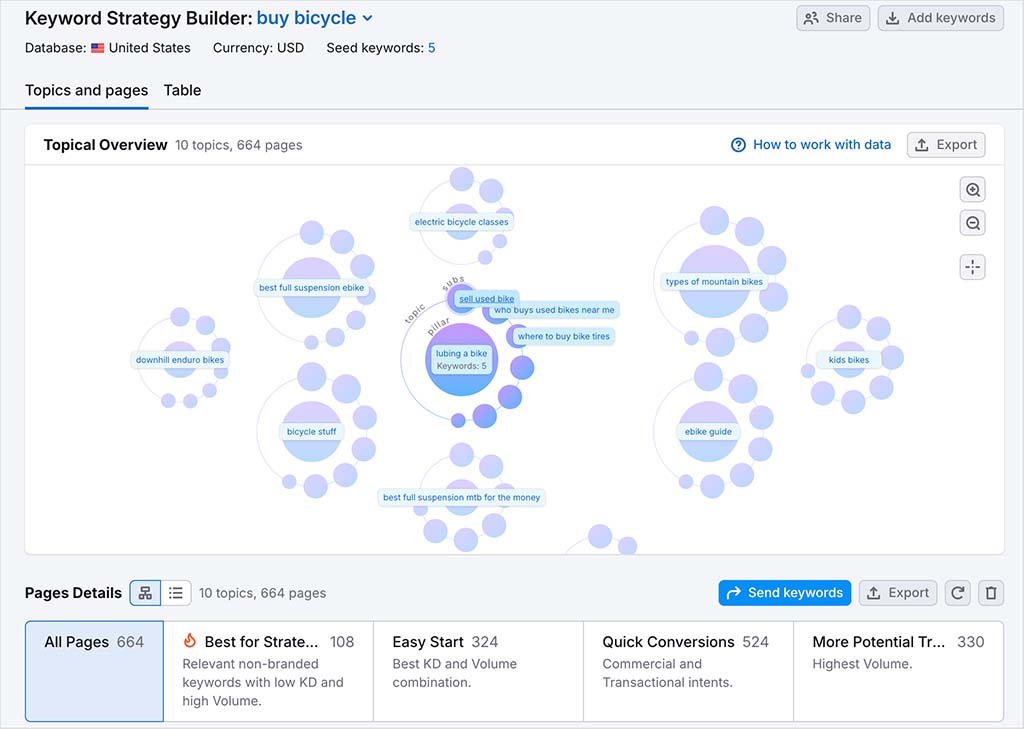
In practice, this makes it far easier to move from raw keyword research to a structured content plan. Instead of manually organizing hundreds of keywords, Semrush automatically turns them into logical topic clusters and page groupings — saving time while helping you build more coherent, search-friendly site structures.
As things stands, Raven Tools currently doesn’t offer any AI-powered features in its SEO toolset.
11. Semrush gives you advanced content marketing tools
Semrush provides a suite of content marketing tools on its Pro+ plan and higher, including tools to help you:
- identify new topics to write about
- identify keywords that your competitors are using in their posts
- assess your content from an SEO perspective.
These tools help streamline your content creation process and ensure your content is optimized from the get-go.
One of the standout features in Semrush’s content marketing toolkit is its ‘SEO Writing Assistant‘ tool. This lets you either paste content directly into Semrush for analysis or import it from a webpage using a URL.
(You can also create content within Semrush and receive real-time optimization suggestions as you write.)
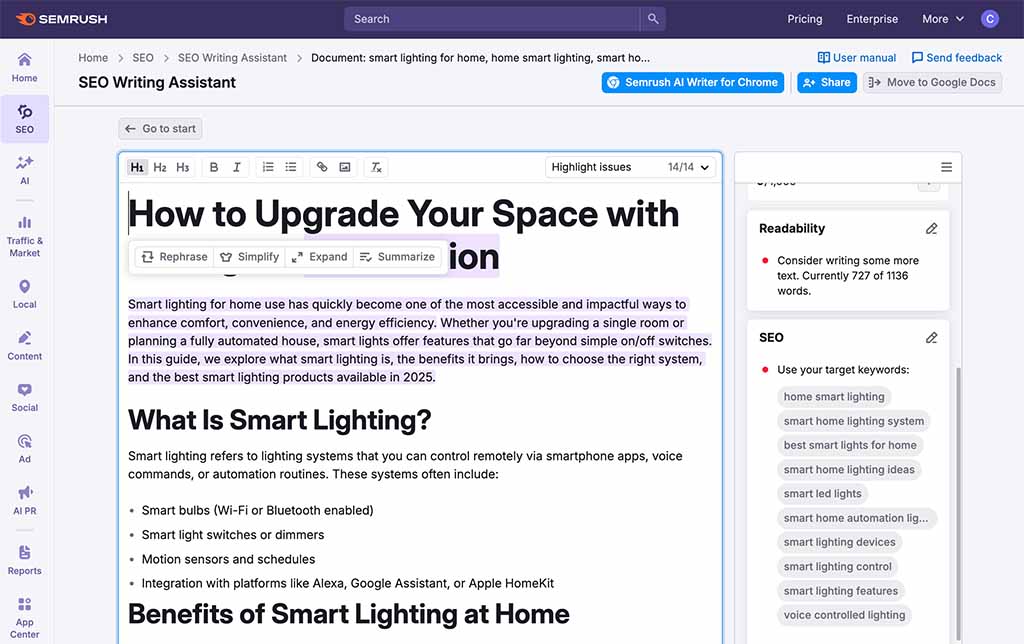
Semrush’s ‘SEO Writing Assistant’ then provides actionable insights to improve your content’s search performance. These include recommendations on adjusting word count, adding relevant keywords, and warnings about duplicated content.
Raven Tools, by contrast, offers very basic content creation features: a simple text editor and a WordPress integration. While useful, these features lack the depth and innovation found in Semrush’s offerings.
12. Semrush integrates with more tools
Semrush seamlessly integrates with a diverse range of third-party tools, making it extremely powerful and versatile for managing various aspects of digital marketing and SEO.
Key integrations include:
- Google services: Analytics, Search Console, Ads, Sheets, Docs
- Social media platforms: Facebook, Twitter, LinkedIn, Instagram, YouTube, Pinterest
- Project management tools: Trello, Asana, monday.com
- Content management systems: Shopify, Webflow, WordPress, Wix
- SEO tools: SurferSEO, All in One SEO
- Zapier integration: Connects to hundreds of other apps.
Furthermore, Semrush provides access to a dedicated app store containing around 60 apps, many developed by third parties specifically to enhance the platform. These let you extend its capabilities even further.
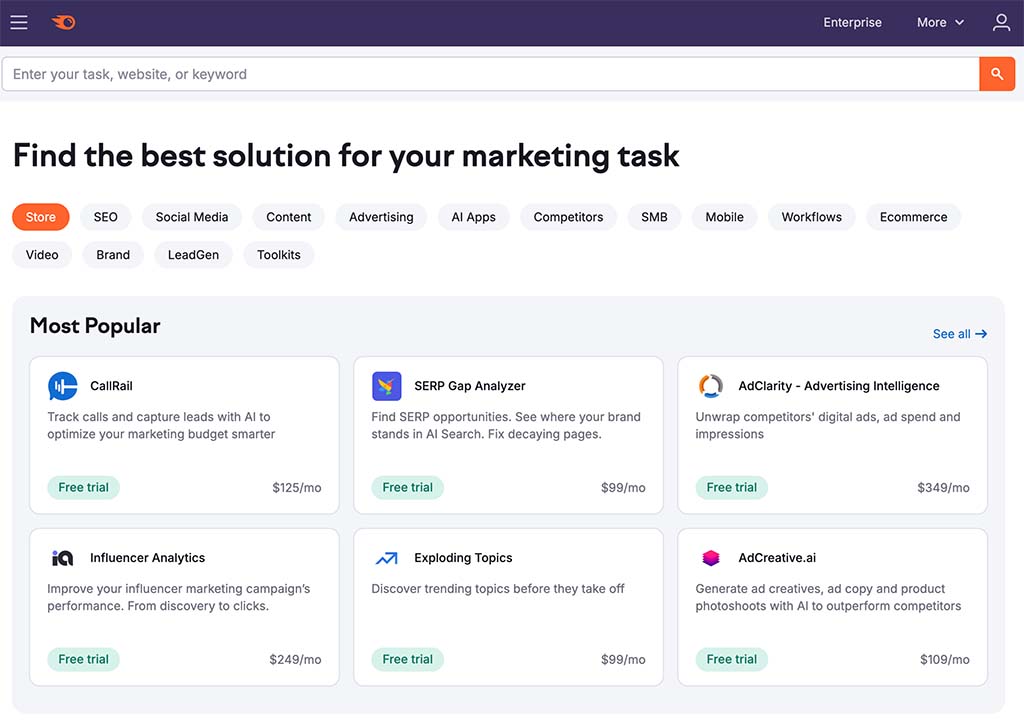
There are significantly fewer integrations available for Raven Tools. That said, some useful ones are available: you can integrate it in various ways with email marketing platforms like Mailchimp and AWeber, social media channels (Facebook, YouTube and LinkedIn) and ad services from Google, Bing and Facebook.
But unlike Semrush, Raven Tools doesn’t have an app store, which means that its extensibility is ultimately going to be more limited.
13. You can get a longer free trial for Semrush
Technically the ‘default’ length of a free trial for both Semrush and Raven Tools is just seven days. However, Semrush sometimes makes longer ones available — right now you’ll find a double-length version of the Semrush trial available here.
So that’s a list of key things I feel Semrush does better than Raven Tools. But where does Raven Tools have the edge? Let’s find out.
Reasons to use Raven Tools instead of Semrush
In truth, based on testing both tools extensively, I found it hard to find many — if any! — reasons to use Raven Tools over Semrush. But there are a couple of areas that might nudge you towards it, and I’ll take you through these now.
1. Raven Tools is cheaper
Raven Tools can be used much more cheaply than Semrush. Its entry-level ‘Small Business’ plan costs just $49 per month — $91 cheaper than Semrush’s equivalent entry-level plan (the ‘Semrush Pro’ plan, which costs $199 per month).
This cost differential won’t be insignificant to businesses on a budget or those just starting with SEO.
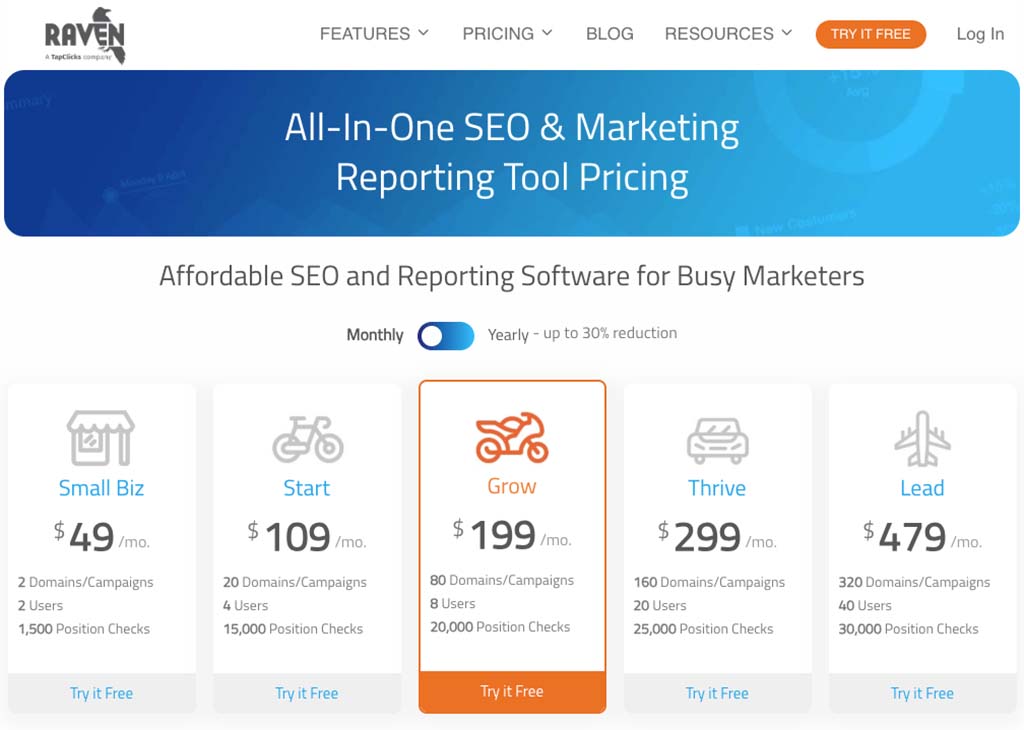
Despite its lower cost, Raven Tools still offers a useful set of features, including site audits, keyword tracking, white label reporting, and backlink analysis — all helpful when it comes to improving SEO performance.
It’s also worth pointing out that white-label reporting is available from Raven Tools at a much lower price point. Its $199-per-month Grow plan includes full white-label reporting as standard.
By contrast, accessing white-label reporting in Semrush requires purchasing its separate Pro Reports add-on, which costs $20 per report, per month. This means that white-label reporting costs in Semrush can add up quickly as your client base and reporting requirements grow.
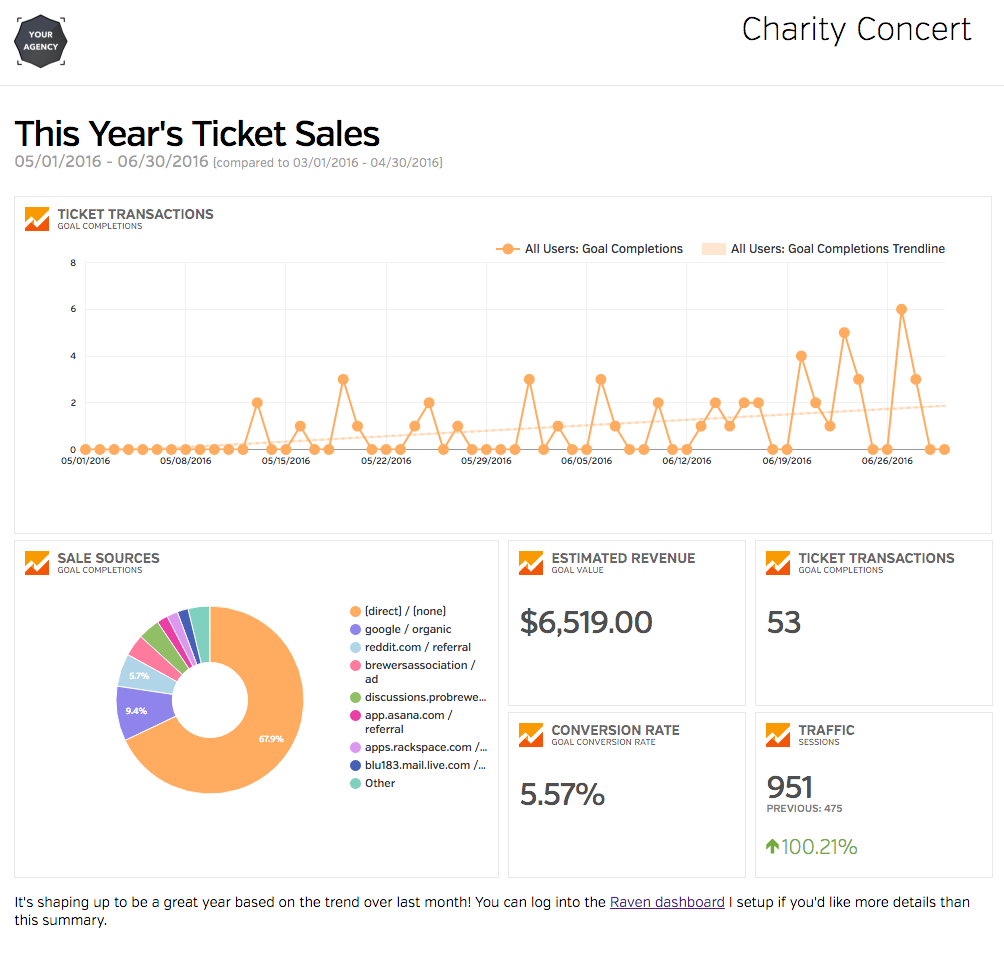
And finally, if you’re ready to commit for the long haul, Raven Tools offers more generous discounts for paying annually: 30% vs Semrush’s 17%.
2. Raven Tools’ rank tracking limits are much more generous than Semrush’s
When it comes to rank tracking, Raven Tools is significantly more generous than Semrush, giving you the scope to track a lot more keywords, and a lot more cheaply too. Its position tracking limits are as follows:
- Small Business Plan, $39/mo — 1,500 keywords per month
- Start, $79/mo — 15,000 keywords per month
- Grow, $139/mo — 20,000 keywords per month
- Thrive, $249/mo — 25,000 keywords per month
- Lead, $399/mo — 30,000 keywords per month
By contrast Semrush only lets you track 500 keywords on its $199 entry level plan, 1,500 on its $299 plan, and 5,000 on its $549 plan.
3. Raven Tools plans include multiple users
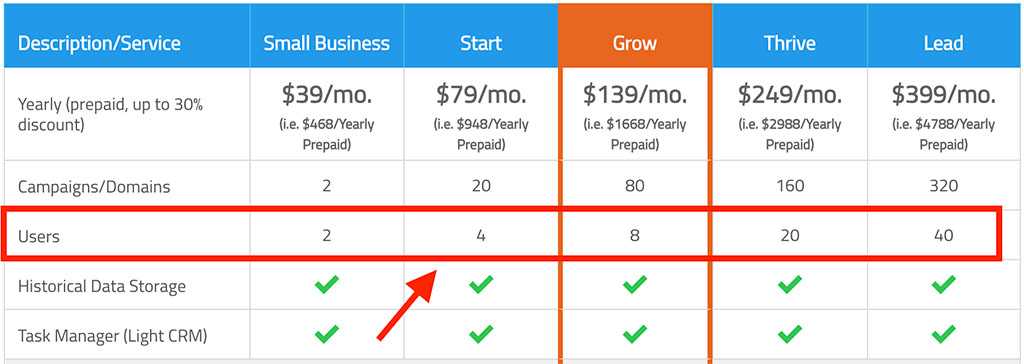
All Raven Tools plans let multiple users access your account. The seat limits across its pricing plans are as follows:
- Small Business Plan — 2 users
- Start Plan — 4 users
- Grow Plan — 8 users
- Thrive Plan — 20 users
- Lead Plan — 40 users.
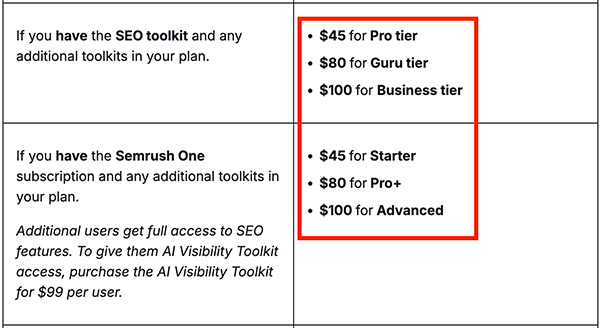
It’s a different story with Semrush, however, because by default, all its plans only come with one seat. Adding extra users to your Semrush account costs between $45 to $100 per month per user (depending on plan) — something that will see your costs spiralling if you have a lot of staff that need access to your SEO tool.
4. Raven Tools gives you higher page crawl limits and more campaign slots
If you need to audit large sites, you may appreciate Raven Tools’ more generous page crawl limits. Its ‘Small Business’ plan offers up to 50,000 page crawls per month; this limit scales all the way up to 7 million pages if you end up on Raven Tools’ ‘Lead’ plan.
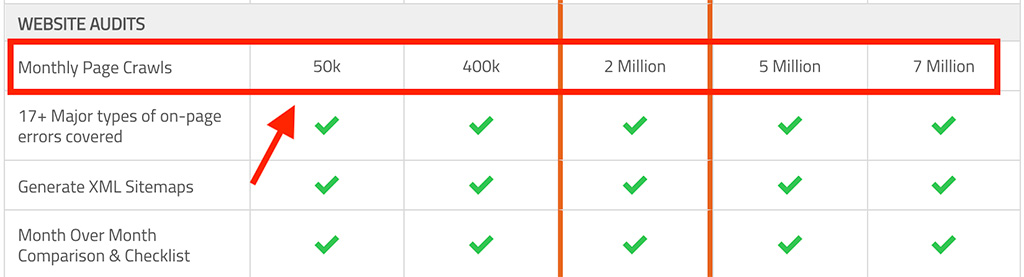
By contrast, Semrush’s ‘Starter’ plan lets you crawl 100,000 pages per month, the ‘Pro+’ plan 300,000 and the ‘Advanced’ plan 1 million.
Raven Tools also gives you more project slots to play with — you can go from 2 up to 320 with Raven Tools, which compares positively with Semrush’s 5 to 40 range.
Project slots effectively allow you to track domains; to do in-depth analysis on them regularly and keep tabs on their performance over time via:
- rank tracking, which allows you to monitor your domain’s keyword positions
- regular site audits that alert you automatically to any technical SEO problems.
It should be remembered, however, that Semrush’s overall feature set is considerably larger than Raven Tools’ — so while Raven Tools is more generous when it comes to the number and size of websites that you can add to your account, the analysis you’ll be able to do on them will be much more basic.
User reviews and feedback
So far, I’ve focused mainly on my own hands-on testing of Semrush and Raven Tools. But I also think it’s important to look at what other users think of both platforms, particularly when it comes to reliability, ease of use, and overall value.
The table below summarizes feedback from customers on major software review platforms — including Capterra, G2, and TrustRadius — giving a broader perspective on how each tool performs in everyday use.
(Figures are correct at the time of writing — January 2026.)
| User reviews platform | Semrush | Raven Tools |
| G2 | 4.5 / 5 (3,363 reviews) | 4.2/5 (154 reviews) |
| Capterra | 4.64 / 5 (2,312 reviews) | 4.4 (121 reviews) |
| TrustRadius* | 4.3 / 5 (769 reviews) | 3.8/5 (62 reviews) |
| Average score (out of 5) | 4.5 | 4.1 |
* Recalculated from an out-of-ten score.
Overall, Semrush edges ahead on average user ratings — and does so across a vastly larger sample size (one that involves 6,400+ reviews compared to Raven Tools’ 300).
Semrush vs Raven Tools: the verdict
In a Semrush vs Raven Tools shootout, it’s clear that the overall winner is Semrush. Its keyword database dwarfs that of Raven Tools, and it is packed full of features that trounce the extremely basic SEO functionality offered by its rival. Semrush gives you tools and metrics that you simply don’t get at all in Raven Tools — these include detailed domain overviews, AI visibility statistics, traffic estimates, keyword difficulty scores, better site auditing, data visualization and AI content generation features.
And even where both platforms offer similar features, such as keyword research or site auditing, Semrush consistently delivers more detail — and enables users to get much deeper insights into their SEO efforts.
The only reason I can think of to use Raven Tools over Semrush boils down to price. Its entry-level plan is much cheaper than the Semrush equivalent. But with one exception — rank tracking limits, where Raven Tools is considerably more generous than Semrush — these cheaper plans give you a fraction of the SEO functionality that Semrush provides.
So, in a nutshell — if you’re serious about SEO and want a tool that can grow with you, Semrush is definitely the better option. Its advanced features and comprehensive data can provide significant long-term value, while you’ll always be missing part of the SEO picture with Raven Tools.
Try Semrush and Raven Tools out
If you’d like to try Semrush or Raven Tools out for yourself, you can do so via free trial links to both platforms below:
I’ll leave you with a summary of how the features of both tools compare below — and do feel free to leave any questions in the comments section below. We read them all and will do our best to help.
Semrush vs Raven Tools: at a glance comparison table
| Feature | Semrush | Raven Tools |
| Entry level plan cost | $199/month (Starter Plan) | $49/month (Small Business Plan) |
| Annual discount | 17% | 30% |
| Users included in cheapest plan | 1 (additional users cost extra) | 2 |
| Campaigns included on cheapest plan | ‘Starter’ Plan: 5 projects | ‘Small Business’ plan: 2 campaigns |
| Page crawl limits on cheapest plan | 100,000 pages/month | 50,000 pages/month |
| Keyword database size | 27.9 billion keywords | 1.25 billion keywords |
| Domain overview feature | Comprehensive with extensive metrics | Partial and limited by plan |
| AI visibility features | Yes | No |
| Keyword difficulty scores provided | Yes, including personalized scores | No |
| Keyword suggestions per query | Millions for popular terms | Up to 1,000 (often returns ~60) |
| SERP feature reporting | Yes | No |
| Search intent reporting | Yes | No |
| Data visualization quality | Strong, with graphs and charts | Limited; mostly tables |
| AI features | Yes | None |
| Content marketing tools | Yes (‘Pro+’ plan and above) | Limited; basic editor and WordPress integration |
| Backlink database size | 43 trillion backlinks | 45 trillion (via Moz and Majestic) |
| Toxic backlink analysis | Yes | No |
| Traffic estimates | Yes | No |
| Advertising and PPC Data | Comprehensive | Limited |
| Integrations | Extensive; includes Google services, social media, project management | Limited; email marketing platforms, social media, Zapier |
| App store available | Yes (around 60 apps) | No |
| White-label reporting | $20 per report | Included in plans from $199/month |
| Support options | Email, live chat, phone; multilingual support | Email support only; English language only |
| Mobile app available | Yes (iOS; position tracking features) | No (usable via mobile browser) |
| Free trial length | The standard trial is 7 days long — double-length version available here. | 7 days |
Don’t miss out on our free SEO toolkit
For a limited time only we’re offering our readers some excellent free SEO tools and resources. Sign up now to immediately receive:
- our downloadable cheatsheet containing the 20 key steps to ranking highly in search results
- extended free trials and discounts for leading SEO tools
- our downloadable cheatsheet on how to grow organic traffic to a blog
- 2 in-depth guides to SEO
- ongoing free tips and advice on SEO and growing your business
Alternatives to Semrush and Raven Tools
Semrush and Raven Tools are not the only choices available when it comes to SEO software. Some of the key alternatives include:
- Ahrefs
- Moz
- SE Ranking
- Similarweb
- Majestic
- SEO Powersuite
- Serpstat
- SpyFu
- Ubersuggest
For more information about Ahrefs, do check out our full Ahrefs review. You might also like to read our detailed Ahrefs vs Semrush comparison.
Due to the fact that it’s more affordable than many of its competitors, Ubersuggest is one of the key alternatives to Raven Tools. You can learn more about how it stacks up against Semrush here.
If you’re interested in checking out Moz, our Moz vs Semrush and our Moz vs Ahrefs comparisons are well worth a look. We’ve also got a three-way comparison between Moz, Ahrefs and Semrush available.
You might also find our SE Ranking vs Semrush and Semrush vs Similarweb comparisons helpful. Finally, we have a full Similarweb review available too.
📚 Related resources: Raven Tools review | Semrush pricing guide
Update details
This post was updated on January 30, 2026. The following key updates were made:
- A new ‘Quick Verdict’ section was added.
- Semrush pricing and plan names were updated to reflect the introduction of the new ‘Semrush One’ version of the platform.
- Information on Semrush’s AI visibility features was added to the domain overview section.
- Product screenshots were updated.
- Keyword database size statistics were updated.
- Information on Semrush’s ‘AI search health’ feature was added to the section on site auditing.
- The SERP feature reporting section was edited to include details of Semrush’s inclusion of AI Overview data.
- A user reviews section was added.
- The comparison table was updated.

No comments