

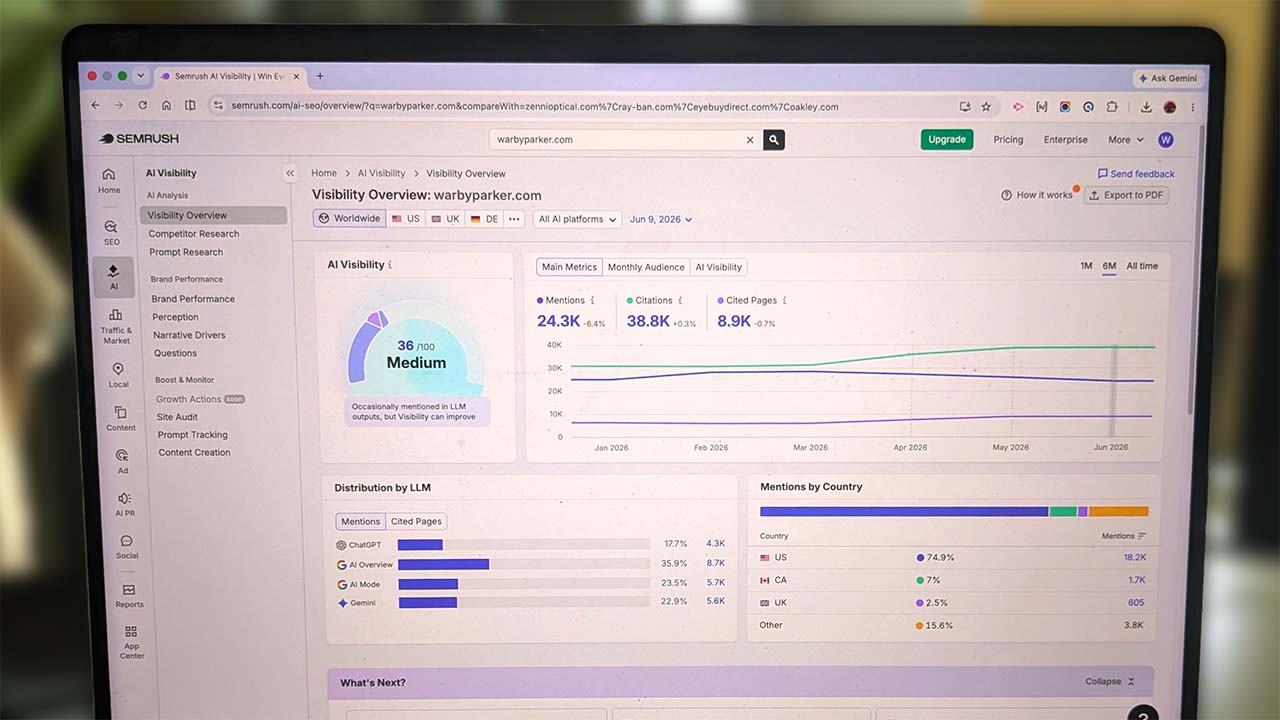
Search is changing fast: it’s no longer just about ranking highly in Google. Businesses increasingly need to think about how they appear in AI-powered search experiences too — ChatGPT, Claude, Gemini and so on.
As a result, many of the platforms traditionally considered SEO tools are evolving into broader “online visibility platforms,” offering features designed to help users monitor and improve their presence across both traditional search engines and AI-driven discovery channels. But with so many options on the market, choosing the right platform isn’t always easy.
So, in this guide, I’m going to take a look at five of the leading SEO / AI visibility tools available today: Semrush, SE Ranking, Moz, Ubersuggest, and Ahrefs.
Read on for an overview of where each one excels or falls short — and which one is the best fit for your needs.
ℹ️ Please note: This isn’t a ‘ranked’ list — I have simply included the SEO/AI Visibility platforms that, based on my tests, I believe are genuinely worth exploring in 2026. My aim is to match you with the best tools for your individual needs.
If you’re unfamiliar with any of the terms that crop up in this roundup, feel free to dip into our SEO glossary for a quick explanation of key terms used in the article.
Best SEO / AI Visibility Tools — quick links
Semrush
Historically an SEO tool market leader, Semrush has arguably developed into the most fully featured visibility tracking platform currently available.
Alongside its well-established keyword research, backlink analysis and site auditing tools, it now provides dedicated AI visibility features that help businesses understand how often they are mentioned and cited in AI-powered search experiences like ChatGPT, Gemini, Perplexity and Google’s AI Mode and AI Overviews.
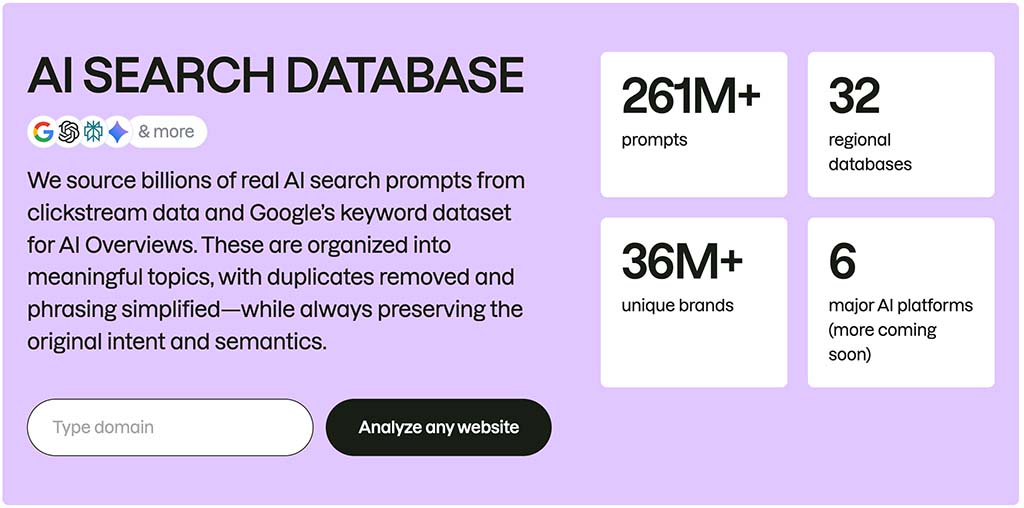
At the time of writing, Semrush’s AI search database contains more than 261 million prompts, 36 million brands and data from 32 regional databases. This gives it one of the largest AI visibility datasets currently available (second only in size to Ahrefs’) and gives Semrush users access to particularly strong insights into the visibility of their content in both traditional search and LLMs.
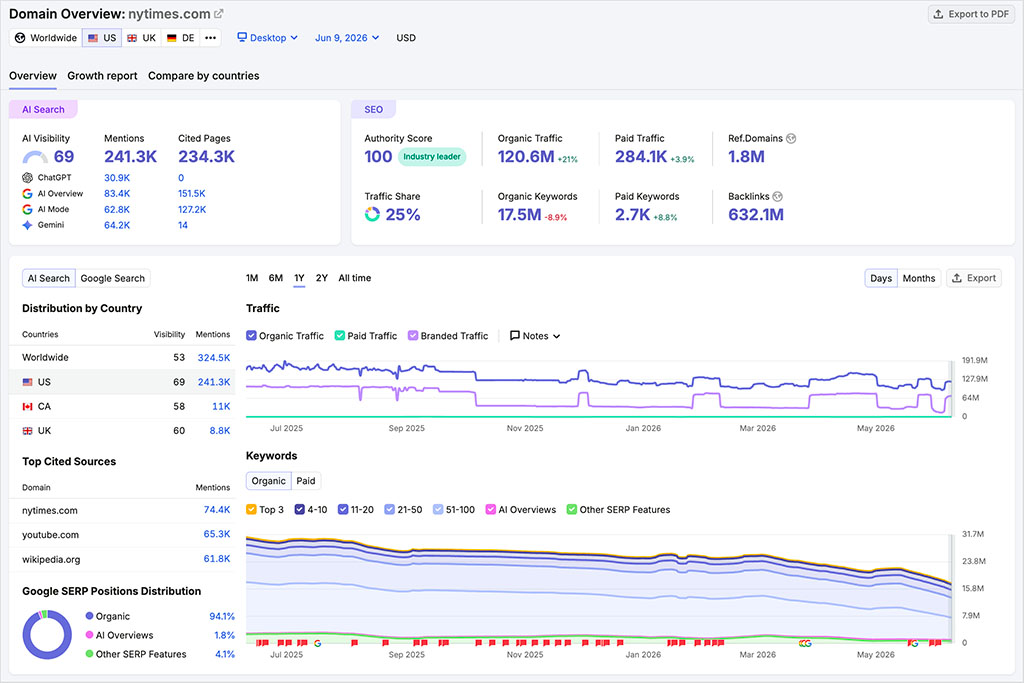
What I particularly like about Semrush’s approach is how neatly AI visibility data is integrated with traditional SEO metrics. In its Domain Overview reports, for example, you can view AI-specific metrics like visibility scores, mentions and cited pages alongside more traditional data like authority scores, organic traffic, keyword rankings and backlinks.
This makes it much easier to understand how your overall brand visibility is evolving — and avoids the need to jump between separate SEO and AI reporting tools or features.
Semrush’s AI Visibility toolkit includes prompt tracking, citation analysis, share-of-voice reporting, sentiment analysis and competitor benchmarking.
These tools help you understand not only how often your brand appears in AI-generated answers, but also:
- how it’s being described
- which sources AI systems rely on when discussing your industry
- how your visibility compares to that of competing brands.
The platform’s prompt tracking, sentiment and share-of-voice reports are particularly useful — they make it easy to identify opportunities to improve your presence in AI search results. The platform also provides brand sentiment analysis — a feature that remains unavailable in several competing AI visibility tools.
Accessing these features is relatively straightforward. They’re included on all Semrush One plans (starting at $199 per month), but businesses that don’t need the platform’s full SEO feature set can also purchase them separately via its AI Visibility toolkit, which costs $99 per month per domain.
(This sits alongside a growing range of specialist Semrush toolkits, including Traffic & Market, Local, Content, Social, Advertising and AI PR.)
When it comes to traditional search visibility, Semrush remains one of the strongest tools on the market.
Its keyword database now contains more than 28.5 billion keywords, making it one of the largest available. This database provides data for over 120 countries; and the keywords it contains can be filtered by search intent, keyword difficulty, SERP features and keyword type (including question-based searches, branded terms, and long-tail phrases).
Semrush also provides dedicated tools for researching keywords across Google, Bing, YouTube and Amazon, plus live CPC data for paid search campaigns.
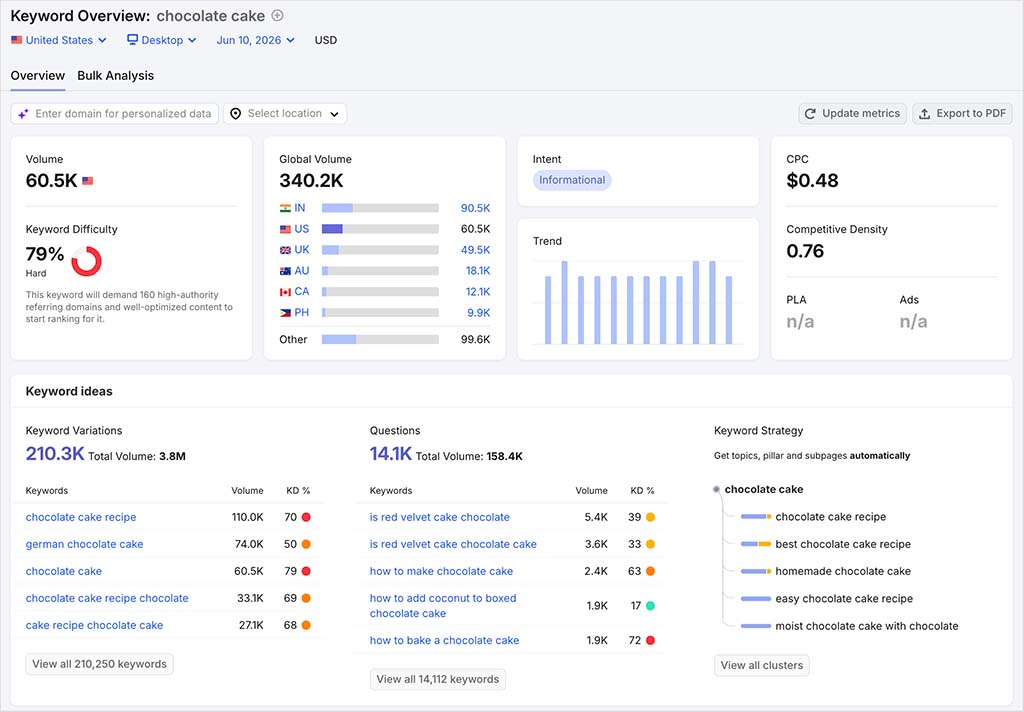
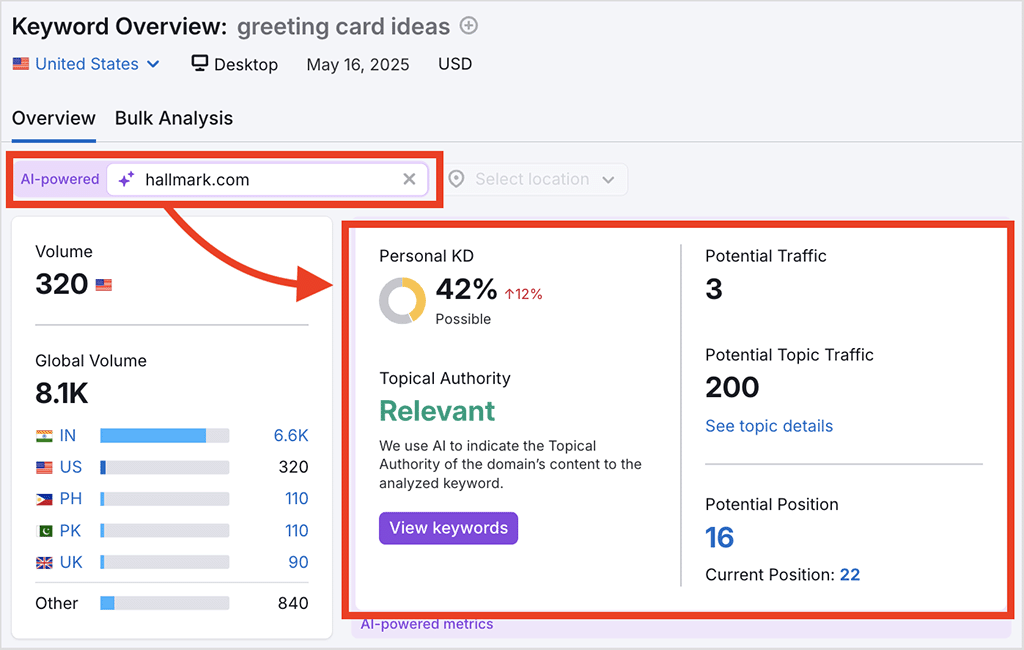
One of my favorite Semrush features — and one exclusive to the platform — is its personalized keyword difficulty score. While most tools give you a generic keyword difficulty rating based on overall competition for it, Semrush goes one further by estimating how hard it would be for your site to rank for a given term.
It does this by taking your topical authority, backlink profile and content performance into account to give you a far more realistic picture of what’s achievable for your specific site. For me, this is one of the smartest features in the platform — and one I find myself returning to regularly when prioritizing which keywords to target next.
On the visibility and rank tracking side, Semrush lets you monitor performance across both traditional search engines and AI-powered search experiences. Alongside daily rank tracking across Google and Bing, the platform can track visibility in Google AI Overviews and ChatGPT Search, giving you a clearer picture of how your content is performing in the rapidly evolving search landscape.
You’ll also find very comprehensive pay-per-click (PPC) data available within the platform. Semrush gives you access to ad copy previews, historical spend and positioning data, CPC figures, and tools to help you build out keyword lists and plan Google Shopping campaigns. So, in terms of SEO and PPC integration, it’s definitely one of the strongest platforms on the market.
Semrush’s backlink database contains over 43 trillion links, making it among the biggest available — it’s larger than Ahrefs’ (35+ trillion links) and second only in size to Moz’s (44.8 trillion links). You can use this database to audit backlinks, monitor referring domains, check link profile toxicity and uncover gaps between your link profile and that of your competitors.
On the technical SEO auditing side, the platform performs well too. Semrush checks for over 140 technical SEO issues, including performance against Core Web Vitals, crawlability, duplicate content and HTTPS implementation. It also gives you a really handy on-page SEO checker that generates specific optimization ideas for individual URLs based on your target keywords.
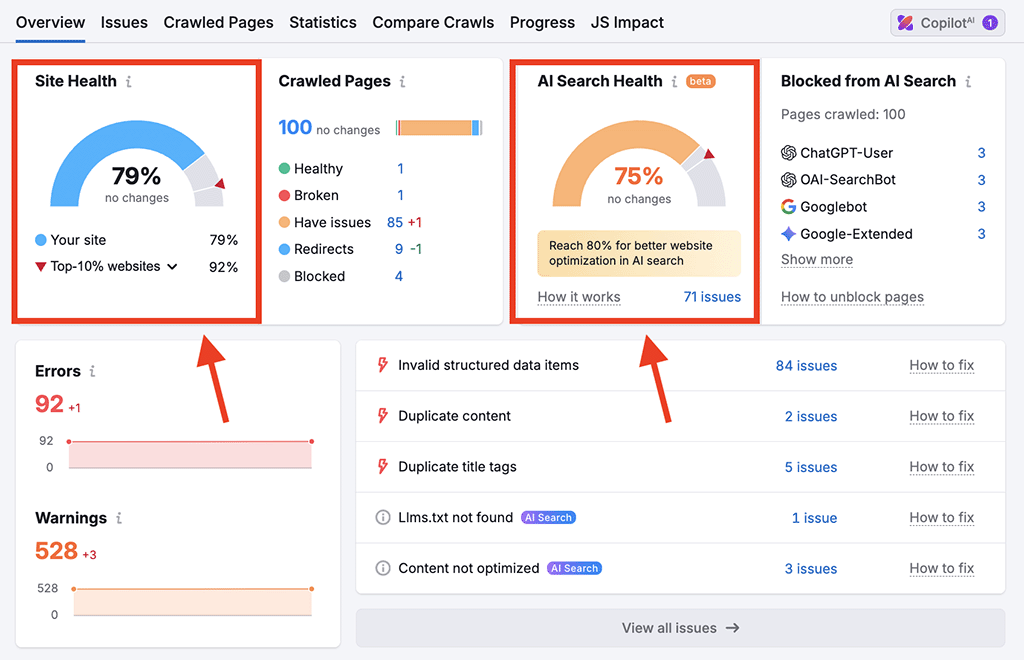
More recently, Semrush has started extending these capabilities into AI search optimization too. Its Site Audit tool now includes an AI Search Health score that evaluates how well your website is positioned for discovery and citation by AI systems. It can also identify issues that may prevent AI crawlers from accessing your content, and provide recommendations designed to improve visibility in AI-powered search experiences.
Semrush also deserves credit for its user experience. The platform packs in a huge number of tools, but the layout stays clean and consistent. It’s a powerful platform that manages not to feel overwhelming.
A big part of the reason for that boils down to how it handles data visualization. Semrush’s reports on keyword trends, backlink growth and competitor performance are presented through interactive charts, sortable tables and easy-to-use filters; these all let you switch views, export visuals, and click into data points for extra detail. It’s one of the best tools I’ve used for turning complex SEO data into something you can actually act on.
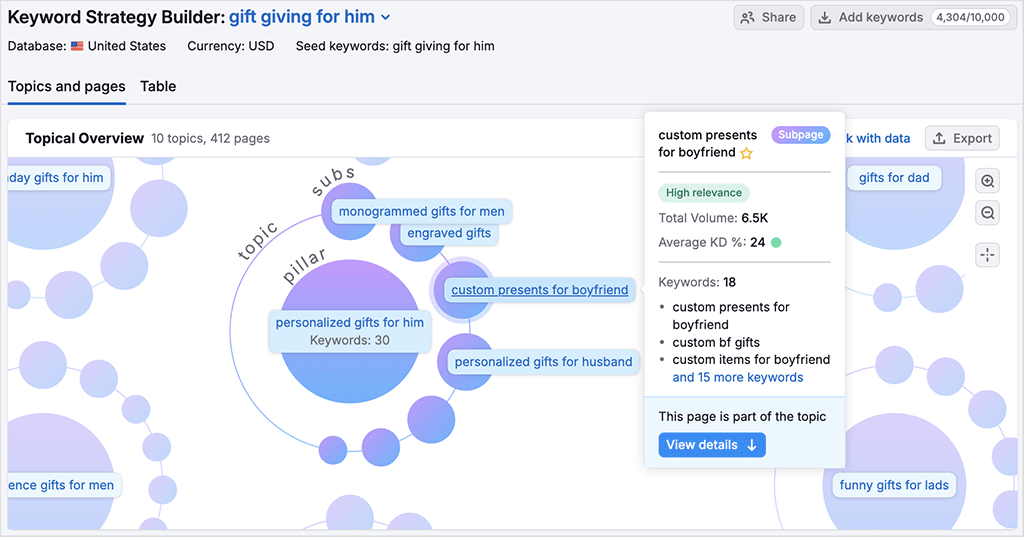
Semrush also includes content marketing tools for topic discovery, SEO brief creation, content audits and performance tracking. Its SEO Writing Assistant integrates with both Google Docs and WordPress.
Beyond its core toolset, Semrush is also one of the most extensible search visibility platforms available. The Semrush App Center gives you access to a wide mix of specialist tools covering everything from advanced content optimization and competitor benchmarking to local SEO.
All these apps integrate smoothly with the main Semrush interface, making it easy to extend the platform in ways that suit your specific workflow.
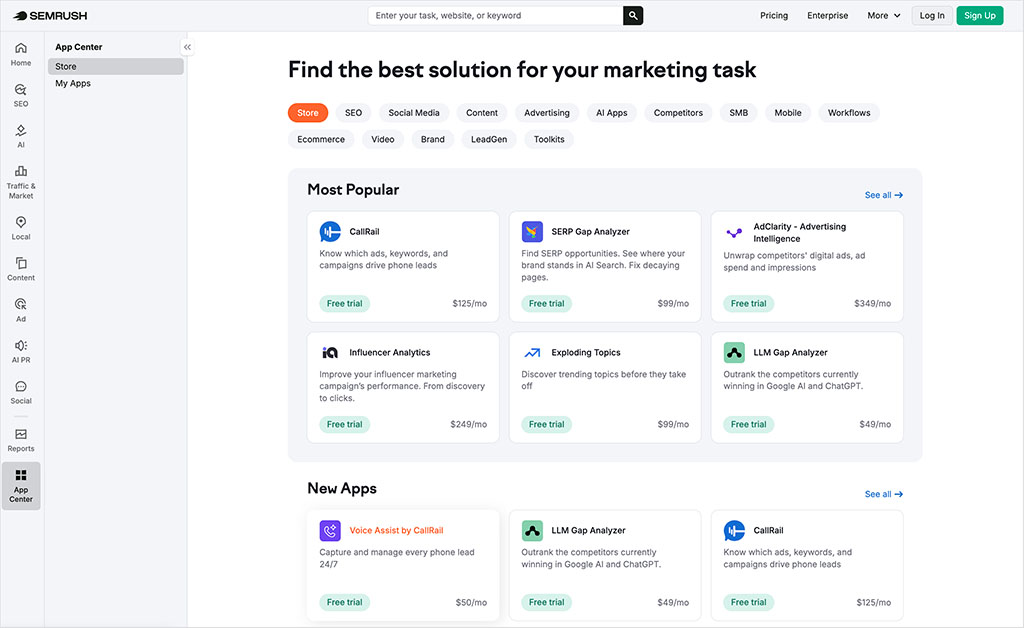
You can also buy official Semrush add-ons that extend the platform into broader areas of marketing such as market intelligence, local SEO, social media management, digital PR and AI visibility.
Semrush’s entry-level Semrush One plan, the Starter plan, costs $199 per month. (Users who only need SEO functionality can opt for the separate SEO plan, which starts at $139.95 per month.) While this makes Semrush one of the more expensive platforms in this roundup, the investment does give you access to one of the broadest feature sets available: a Semrush One plan combines SEO, AI visibility, PPC intelligence, content marketing, competitor research and digital PR capabilities within a single ecosystem.
Who is Semrush best for?
For access to the most complete set of visibility and digital marketing tools in one place, Semrush is hard to beat. It combines powerful SEO tools with market intelligence, PPC data, content marketing features and advanced AI visibility capabilities in a single platform. While it isn’t the cheapest option covered in this roundup, it’s arguably the strongest all-round choice for businesses that want to monitor and improve their presence across both traditional search engines and AI-powered discovery platforms.
SE Ranking
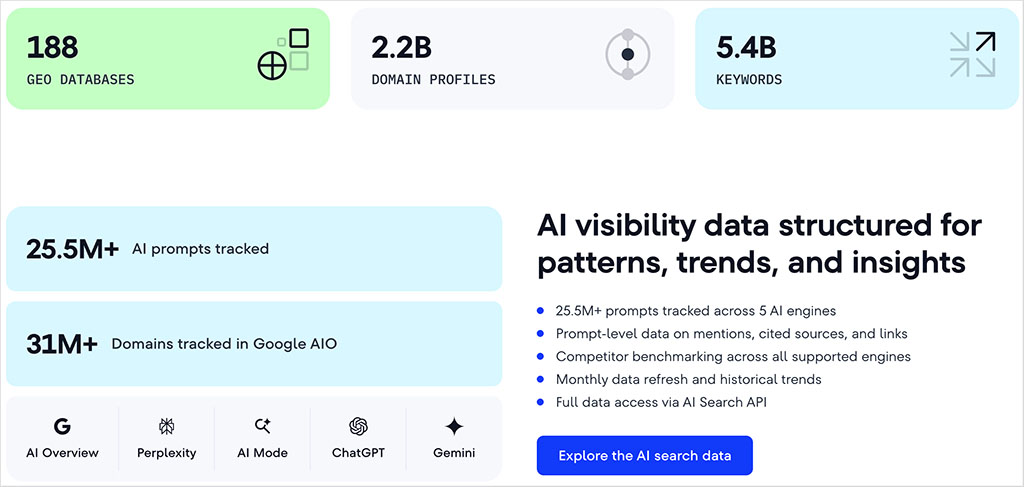
SE Ranking has come a long way in recent years. Originally known as a budget-friendly alternative to premium SEO platforms, it has gradually evolved into a much broader search visibility platform that combines traditional SEO tools with a growing set of AI visibility features.
Like Semrush, SE Ranking now aims to help businesses understand how they’re performing across both conventional search engines and AI-powered search experiences. Through its AI Results Tracker and SE Visible products, users can monitor visibility across ChatGPT, Gemini, Perplexity, Google AI Overviews and Google’s AI Mode.
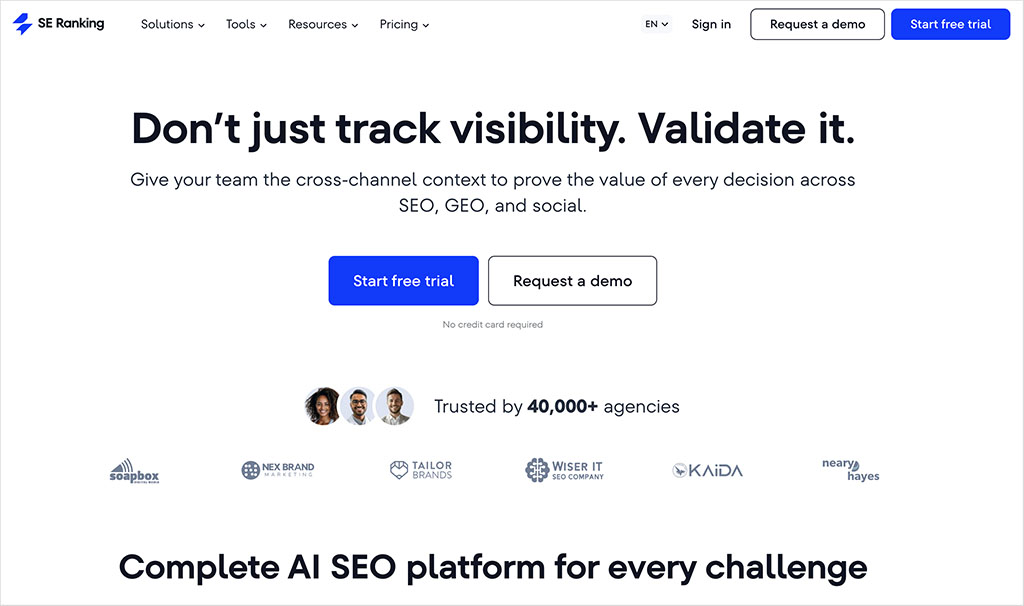
SE Ranking’s underlying datasets are solid too. At the time of writing, the platform tracks more than 25.5 million AI prompts, over 31 million domains appearing in Google’s AI-generated search experiences, 5.4 billion keywords across 188 country databases, 2.2 billion domain profiles and 2.7 trillion backlinks.
While these figures don’t rival Semrush or Ahrefs’ datasets, they’re more than sufficient for many SEO and GEO campaigns. SE Ranking gives users a significant quantity of data with which to track brand mentions, citations, AI rankings and competitor performance across leading AI platforms.
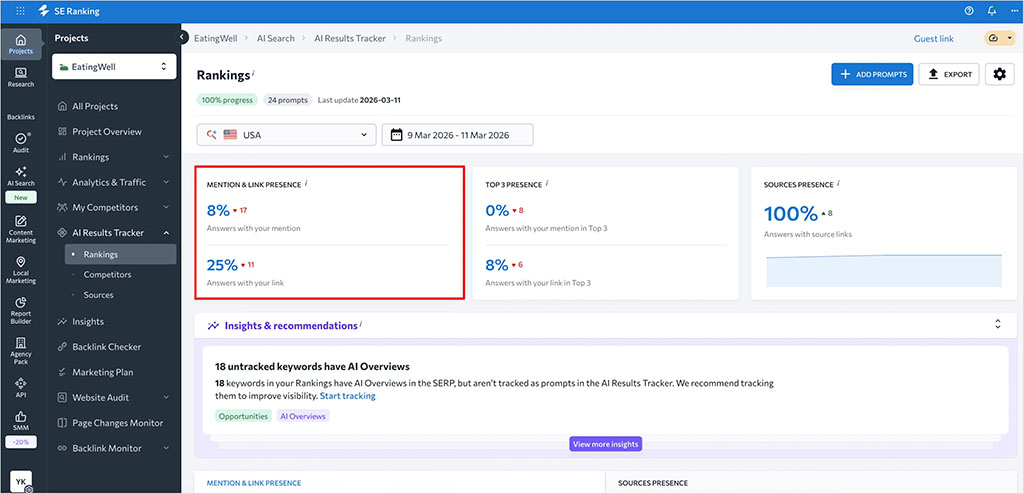
SE Ranking’s AI Results Tracker is particularly useful. This reports on metrics such as mention presence, link presence and top-three visibility in AI-generated answers. The tool can also identify keywords that trigger AI Overviews and provide recommendations for improving your visibility within AI search results.
When it comes to traditional SEO, SE Ranking covers all the essentials: rank tracking, site audits, backlink analysis, keyword research and competitor monitoring. It also includes a built-in marketing plan tool that guides users through key optimization tasks; this makes the platform particularly approachable for SEO novices.
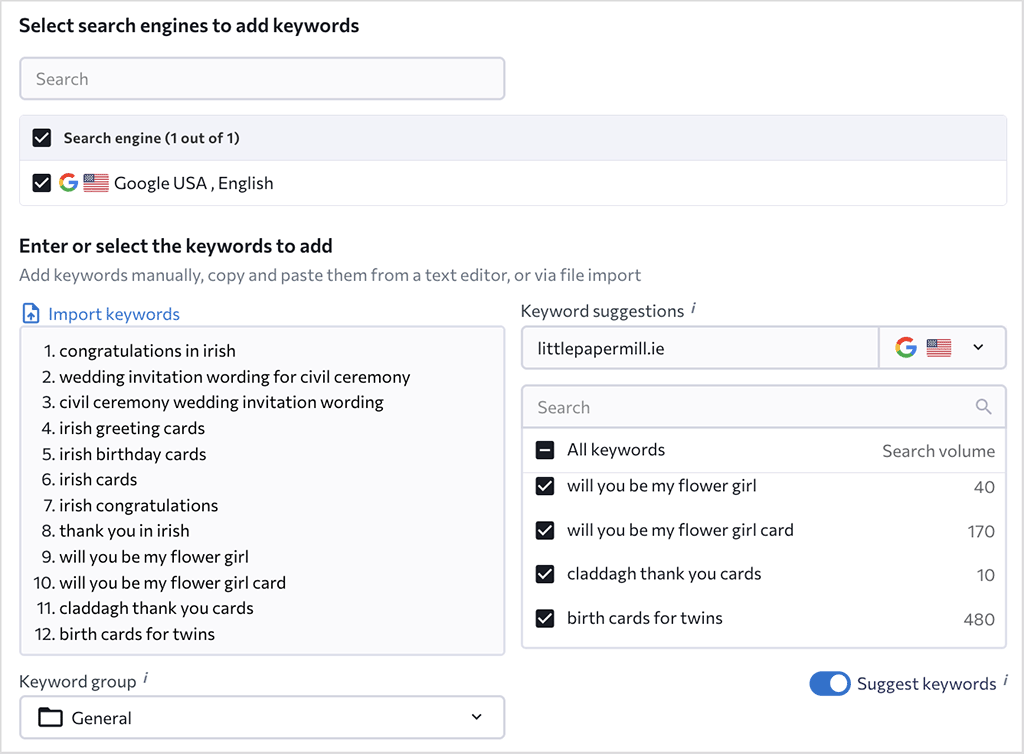
SE Ranking’s rank tracker remains one of its strongest features. The company claims it provides 100% accurate ranking data, and my own testing has also found it to be extremely reliable. Rankings can be monitored across different locations, devices and search engines, with daily updates available for both keyword positions and SERP features.
SE Ranking is generous when it comes to usage limits too. Its entry-level Core + GEO plan lets you track 2,000 keywords, monitor 100 AI prompts and manage 10 projects. Its higher-tier Growth + AI SEO plan increases these allowances to 5,000 keywords, 250 AI prompts and 30 projects.
User allowances are reasonable too. Its Growth + AI SEO plan comes with three user accounts included (for context, Semrush limits you to one seat across all plans). And additional users cost just $16 per month, making SE Ranking considerably more affordable for multi-user subscribers than many competing platforms (which often charge substantially more for extra seats).
SE Ranking’s agency-focused features are a major strength too. Its optional Agency Pack add-on provides white-label reporting, client access, lead-generation tools and additional branding capabilities, making it easier to deliver professional SEO data under your own identity.
It’s worth noting, however, that SE Ranking is no longer the bargain it once was. With its plans now starting at $129 per month, it is priced much more closely to Ahrefs and Semrush than it used to be. On the plus side, the product has evolved considerably too, adding AI visibility capabilities, GEO-focused tools and a broader range of agency features. While SE Ranking is no longer the bargain it once was, it still offers one of the strongest balances of functionality, AI visibility features and usage limits available at this price point.
Who is SE Ranking best for?
SE Ranking is a strong choice for agencies, consultants and businesses that want a capable mix of SEO and AI visibility functionality on a relatively low budget. While it doesn’t match key rivals Semrush or Ahrefs when it comes to data scale or the depth of its AI visibility toolkit, it offers one of the best balances of features, usability, usage limits and pricing in this roundup. For organizations managing multiple websites, clients or brands, it’s an especially compelling option.
👉 You can learn more about SE Ranking here.
Moz
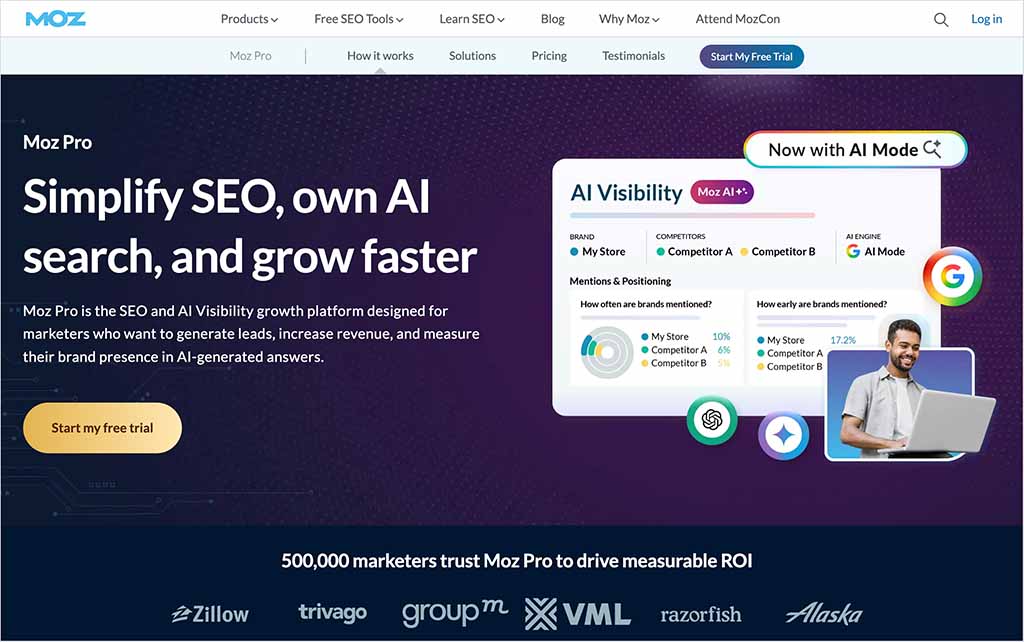
Moz has been a significant player in the SEO world for over two decades, but today it can be viewed as more than just an SEO platform. Alongside its traditional keyword research, rank tracking and site auditing features, it now provides a growing set of AI visibility features designed to help businesses understand how they’re performing across both search engines and AI-powered discovery platforms.
Unlike some competing tools, which aim to be all-in-one marketing suites, Moz is relatively focused on helping you establish brand visibility — whether that’s in Google search results, AI-generated answers or both.
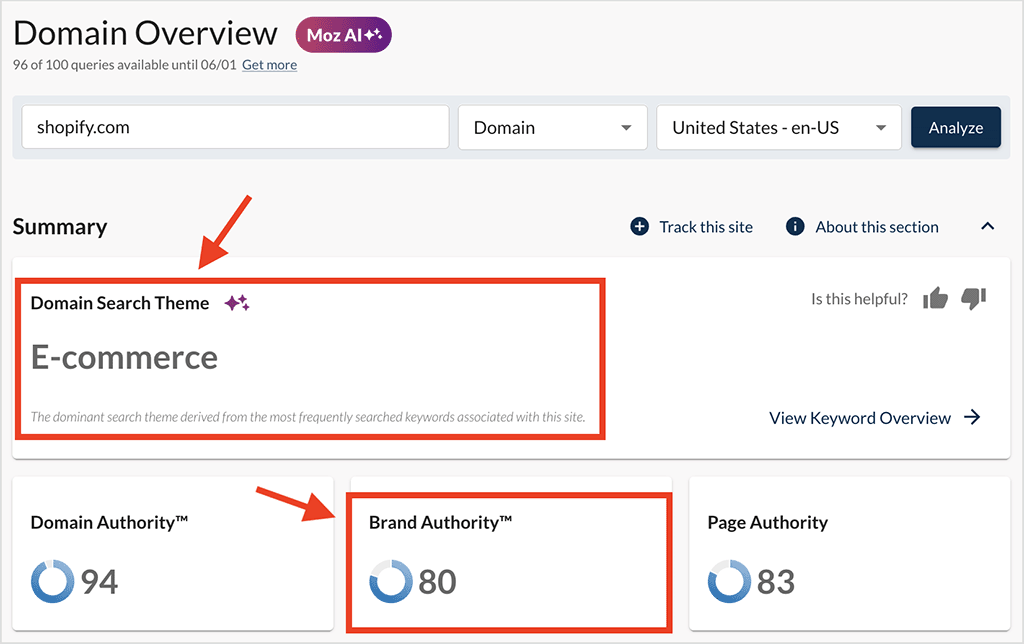
One of Moz’s most distinctive features here is its Brand Authority score. This metric provides a rating between 1 and 100 that reflects how well-known a site (or its parent company) is online — something that’s becoming increasingly important as search engines and AI systems place more emphasis on trusted brands and authoritative sources.
Using this feature, you can see how your brand score compares to key competitors, with a helpful matrix that plots brand and domain authority side by side. This makes Moz particularly useful for businesses focused on measuring and growing brand visibility; and none of the other platforms in this roundup offer an equivalent metric.
I also really like Moz’s ‘domain search theme’ summary, which identifies a site’s core topic based on search behavior. This is a helpful reference point, especially for content-heavy or multi-topic sites. It’s useful for checking if your site’s topical focus is clear — and for quickly assessing whether another domain is a good fit for link building outreach.
Moz’s recently-introduced AI Research toolkit builds on these strengths. Available on its “Medium” and “Large” plans, this gives you access to “Prompt Suggestions,” “AI Content Briefs” and “AI Visibility” tools that (respectively) help users discover AI search prompts, create content around them, and monitor how brands appear in AI-generated responses. Together, these features provide a straightforward way to connect AI search research, content creation and visibility tracking.
(In terms of prompt allowances, the Medium and Large plans let you make use of 100 and 200 tracked prompts, respectively — these limits can be increased for an additional fee.)
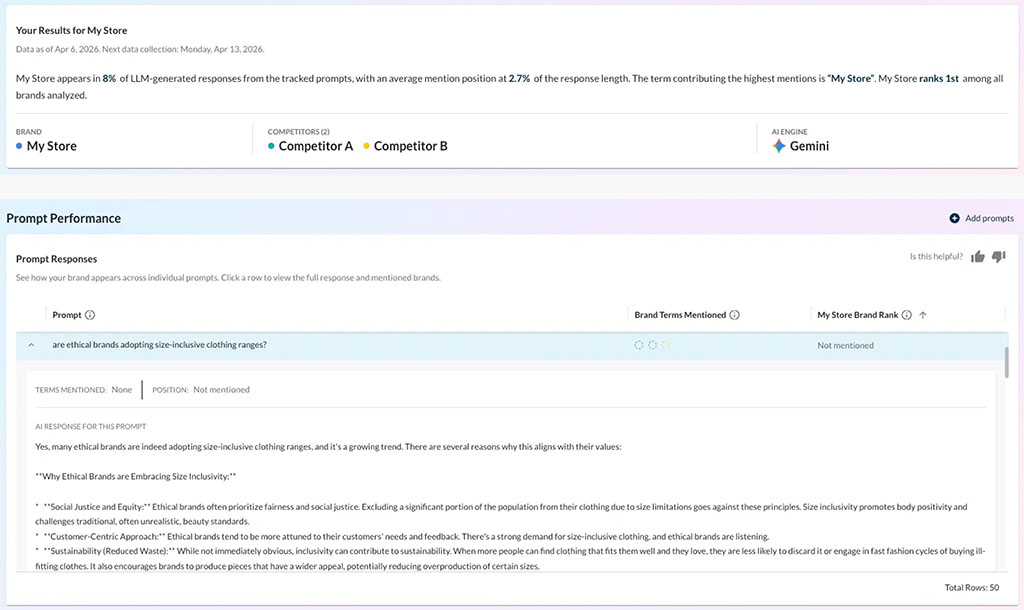
Moz’s AI Visibility tool lets you track performance across ChatGPT, Gemini and Google AI Mode, while also monitoring competitor visibility. Particularly useful here is the option to see not only how often your brand is mentioned, but how prominently it appears within AI-generated responses and how frequently it is mentioned first.
Moz’s AI Visibility reporting interface is clean and easy to understand, thanks to dashboards designed to highlight visibility trends and competitive shifts.
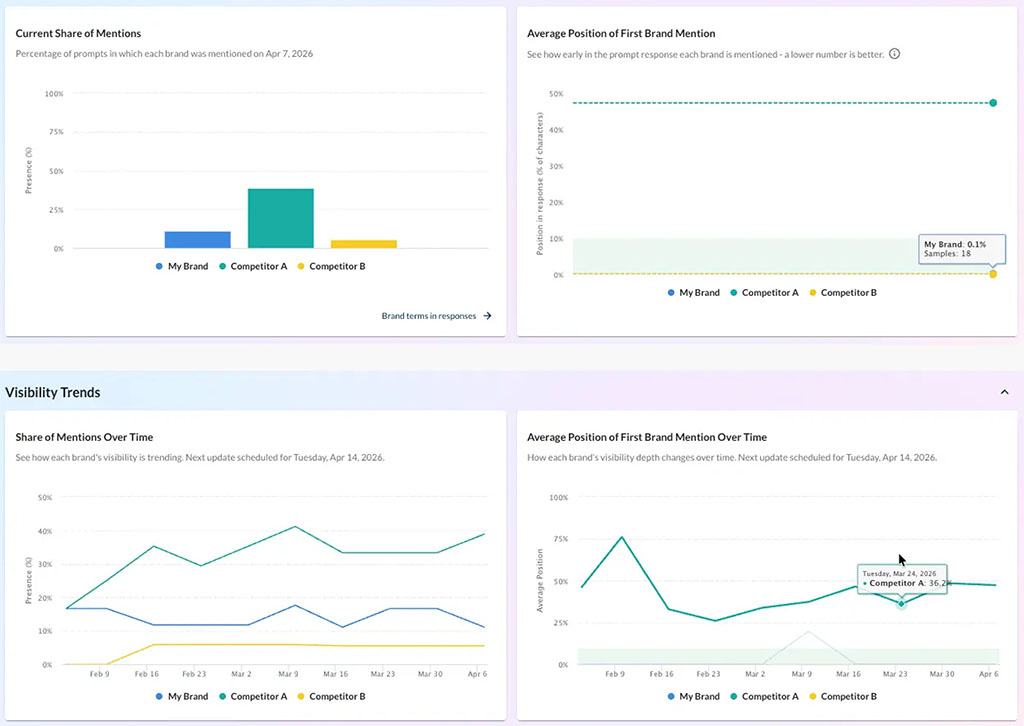
In terms of AI platform coverage, it is worth noting that Moz currently tracks fewer platforms than its key rivals (there’s no support for Perplexity or Claude, for example).
On the plus side, Moz’s backlink index is larger than most — it currently contains over 44.8 trillion links — and gives you access to comprehensive data on referring domains, anchor text and link freshness.
Site auditing is another area where Moz performs well. Its site auditor gives you two key tools — a crawler that identifies technical issues with your site, and an on-page grader that assesses the quality of your content. The reports that these tools output flag things like crawl errors, missing metadata, broken links and keyword stuffing.
(You also get an ‘on-demand’ audit from Moz that lets you perform one-off audits on websites. These are more basic in nature, but don’t eat into your campaign limits.)
Moz’s crawl limits are generous too. On its $99 per month Standard plan, you can audit up to 400,000 pages per month — far more than you’ll get from most similarly priced tools. And the limits stay comparatively high as you move up its pricing tiers.
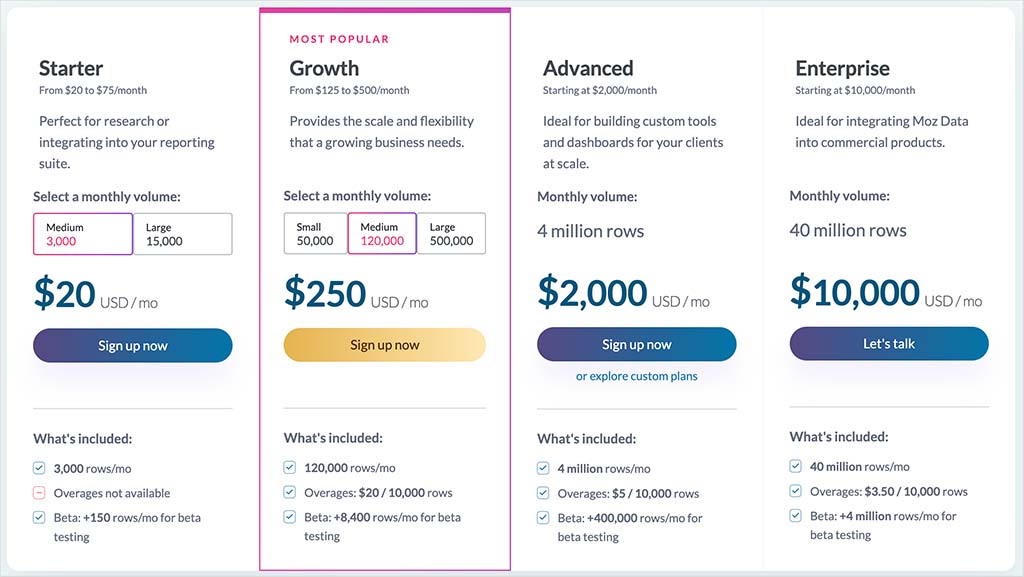
Moz also offers unusually affordable API access. If you want to bring Moz’s SEO data into your own dashboards or applications, you can do so from just $20 per month. Many competing tools lock API usage behind very expensive custom pricing or enterprise plans.
A key Moz drawback is its lack of traffic estimates for competing domains, however. For me, this considerably limits its usefulness for competitor research. (However, if you connect your Google Search Console account to Moz, you can access your site’s traffic data from within the platform.)
And, perhaps most significantly, its keyword database size is relatively small — it contains just 1.25 billion keywords, a lot less than those of key rivals Ahrefs, SE Ranking and Semrush. This means that Moz is not the best tool for getting keyword suggestions.
And despite its very large backlink database, Moz doesn’t give you access to any link building outreach tools. Some competing platforms — Semrush being a prime example — give you built-in features for doing this.
Who is Moz best for?
Moz won’t suit every type of workflow. It doesn’t have the outreach tools, traffic analysis features or advanced AI visibility capabilities you’ll find in some competing platforms. But it’s priced keenly and extremely useful if you need site auditing, link data, API access and straightforward AI visibility tracking — or if you’re building a brand and want to track how well it’s taking hold across both traditional search engines and AI-powered discovery platforms.
Ubersuggest
While competitors like Semrush, Ahrefs, SE Ranking and Moz have expanded into increasingly sophisticated search visibility platforms, Ubersuggest remains focused on providing straightforward, affordable tools for smaller businesses and website owners.
That focus on simplicity is reflected in its pricing. Plans start at just $29 per month, with higher-tier options costing $49 and $99 respectively. This makes Ubersuggest the cheapest platform featured here by a considerable margin. It’s also one of the few major search visibility tools to continue offering lifetime purchase options.
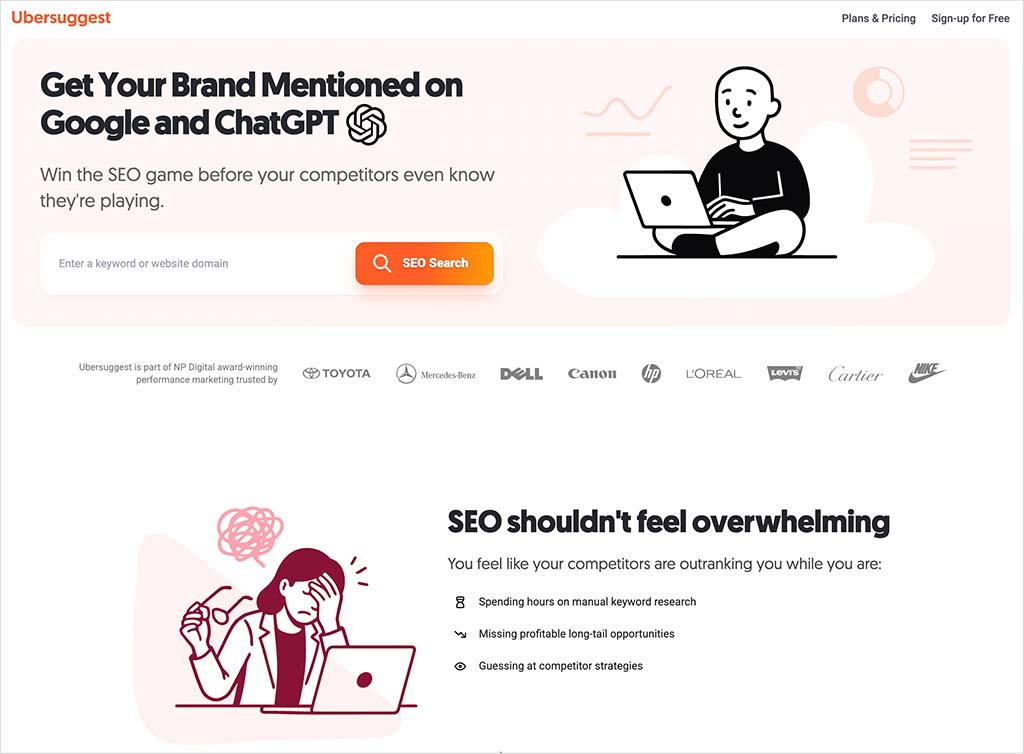
And despite its low price tag, Ubersuggest covers the core functionality most users need. You get keyword research, rank tracking, site auditing, backlink analysis, competitor research and content ideation tools, all presented via a clean, beginner-friendly interface that is significantly easier to use than those of many competing platforms.
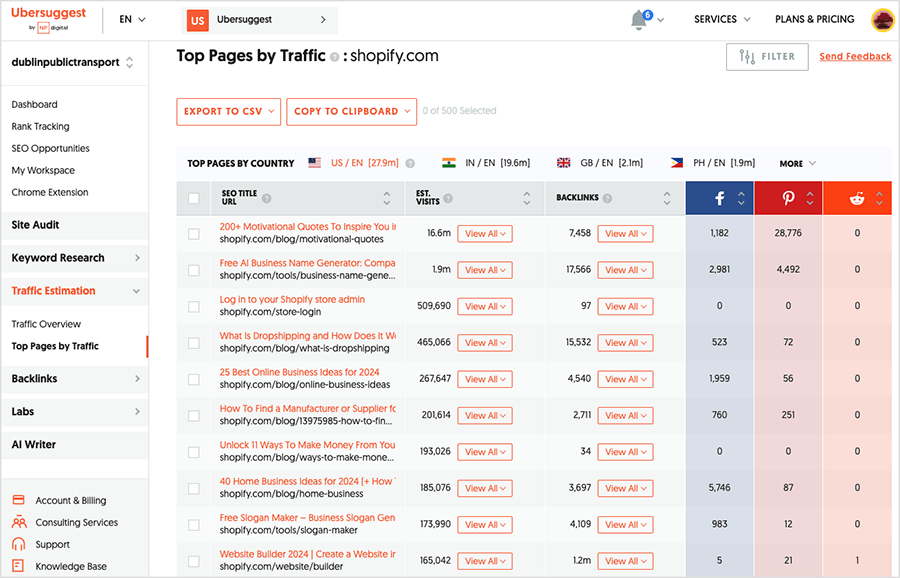
One feature I particularly like is Ubersuggest’s Top Pages report. This provides a quick overview of a site’s best-performing content, including estimated traffic, backlinks and social engagement data from platforms like Facebook, Reddit and Pinterest. The inclusion of social share metrics remains relatively unusual among search visibility tools and can be useful for identifying content ideas that particularly resonate with audiences.
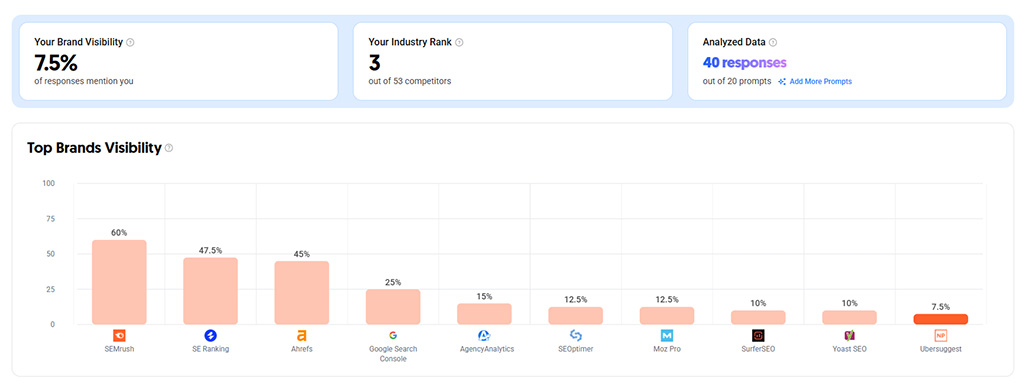
Ubersuggest has also begun incorporating AI search functionality into its platform. Its AI visibility reports allow users to monitor how often their brand appears in ChatGPT and Gemini responses, compare visibility against competitors, and identify prompts that matter to their industry.
The reporting focuses on straightforward metrics such as brand visibility, industry rankings, top prompts and competitor presence. While these tools aren’t nearly as sophisticated as the AI visibility offerings provided by Semrush, SE Ranking or Moz, they provide a simple and affordable entry point into the world of AI visibility tracking.
The platform’s keyword research tools have received AI-related enhancements too. Depending on your plan, Ubersuggest lets you access AI-generated prompt ideas, AI model insights, AI summaries and Google AI Overview data directly within keyword reports.
(Current plans provide between 25 and 75 AI prompt ideas per search.)
Ubersuggest also deserves praise for its mobile usability. Its interface is fully responsive, letting you run audits, check rankings, or do keyword research directly from a phone or tablet — something that can’t currently be said for key rivals like Ahrefs or Semrush.
Another bonus is its Chrome extension, which surfaces key metrics like search volume, domain authority and backlink counts right inside live search results. It’s a convenient way to access key data while you browse.
For support, Ubersuggest includes access to bi-weekly coaching and live Q&A calls with Neil Patel and his team.
The trade-off for all this affordability is that Ubersuggest’s underlying data sets are considerably smaller than those offered by premium competitors. Its keyword research functionality relies heavily on Moz data, meaning you’ll typically uncover fewer keyword opportunities than you would with Semrush, Ahrefs or SE Ranking. Its backlink analysis and competitor research tools are also less comprehensive than those provided by higher-end alternatives.
Ultimately, Ubersuggest isn’t designed for creating large-scale search visibility campaigns or accessing deep competitive intelligence. Instead, it focuses on delivering the essentials in an approachable, affordable package — and for many smaller businesses, that’s likely to be more than enough.
Who is Ubersuggest best for?
Ubersuggest is best for bloggers, solopreneurs and small business owners who want affordable, easy-to-use search visibility tools. It won’t give you the depth, data scale or AI visibility capabilities of platforms like Semrush, Ahrefs, SE Ranking or Moz, but for straightforward keyword research, rank tracking and basic AI visibility monitoring, it offers very good value for money.
Ahrefs
Ahrefs is one of the biggest names in search visibility, and for good reason. It combines excellent keyword research, backlink analysis, competitor intelligence and site auditing tools with some of the largest datasets in the industry. More recently, it has also become a serious player in AI visibility tracking too, thanks to its “Brand Radar” product.
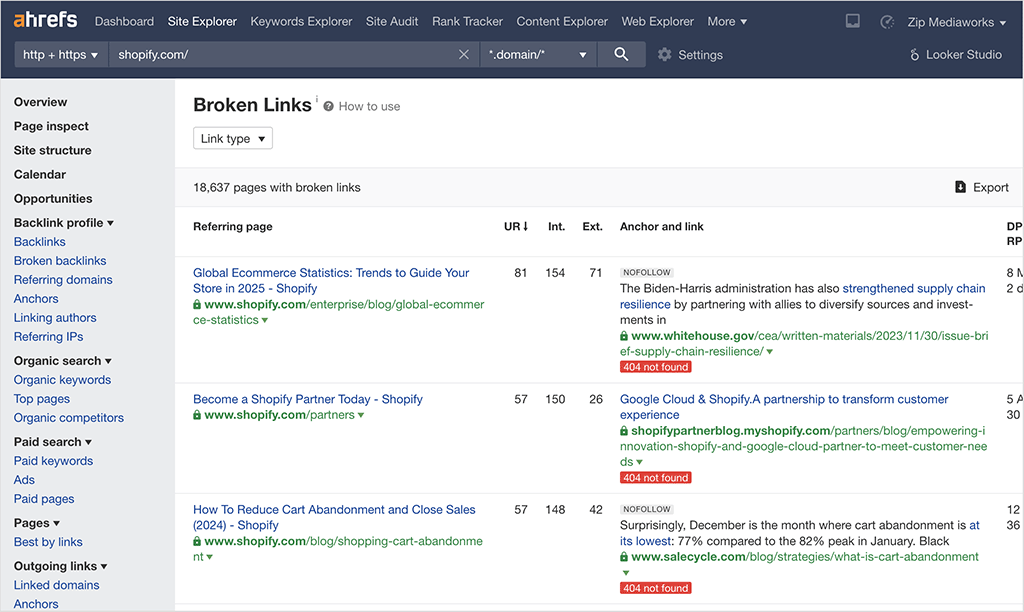
The scale of Ahrefs’ data remains one of its biggest selling points. At the time of writing, its keyword database contains more than 28.7 billion keywords and covers 217 locations, making it the largest keyword database in this roundup. Its backlink index contains over 35 trillion live links, while its crawler tracks more than 19.8 billion pages and provides access to 16 years of historical data.
Its AI visibility datasets are impressive too. Ahrefs’ AI Visibility Index currently analyzes around 387 million monthly prompts across seven AI search environments: ChatGPT, Gemini, Perplexity, Copilot, Grok, Google AI Overviews and Google AI Mode. This gives Ahrefs both the largest AI visibility dataset and the broadest AI platform coverage of any tool featured in this roundup.
(Notably, it is the only platform here that currently tracks Microsoft Copilot and Grok.)
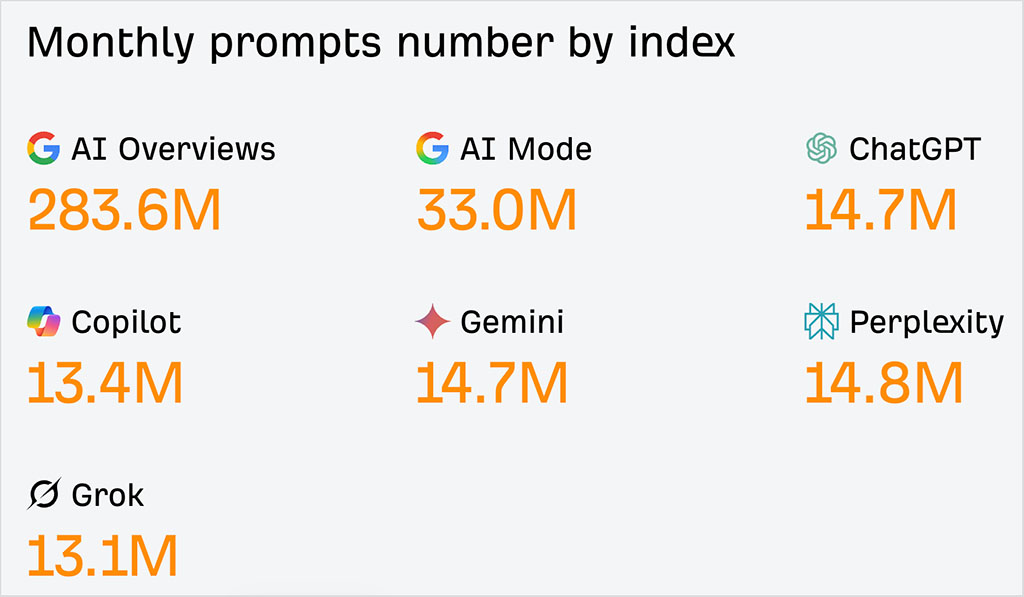
Using this data, Ahrefs’ Brand Radar tool lets you monitor brand mentions, citations and share of voice across AI-generated responses. You can use the tool to compare your brand visibility against that of up to 20 competitors, identify the websites most frequently cited by AI systems, and discover which brands dominate particular topics and industries.
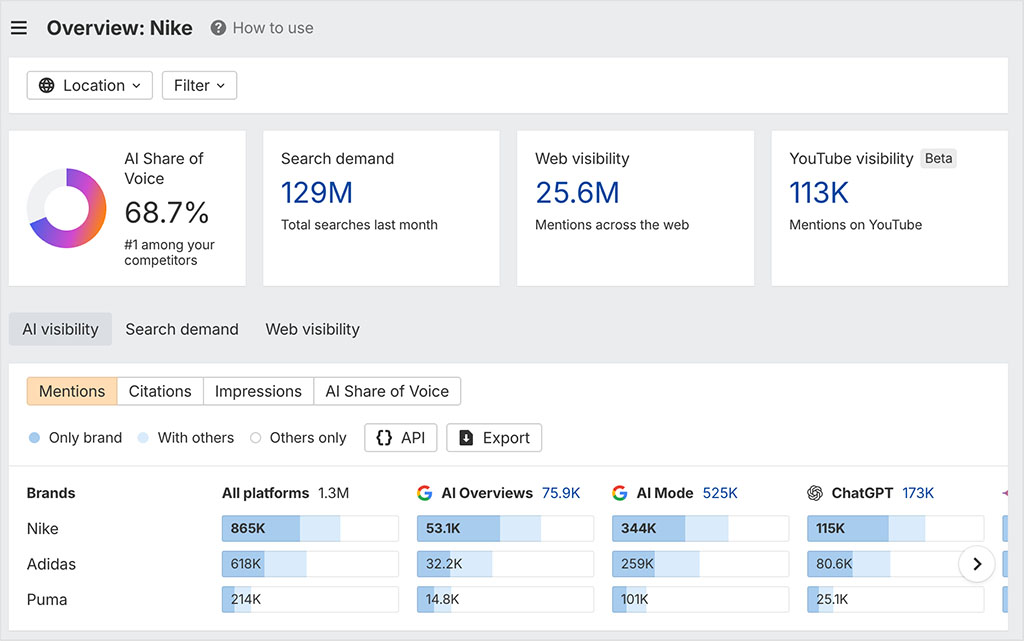
Another distinctive Brand Radar feature is its ability to track brand visibility across YouTube, TikTok and Reddit. This provides extremely useful insights into the creator content and community discussions shaping brand discovery online (both search engines and AI systems draw heavily on user-generated content).
And when it comes to understanding and improving traditional search visibility, Ahrefs remains one of the strongest options available.
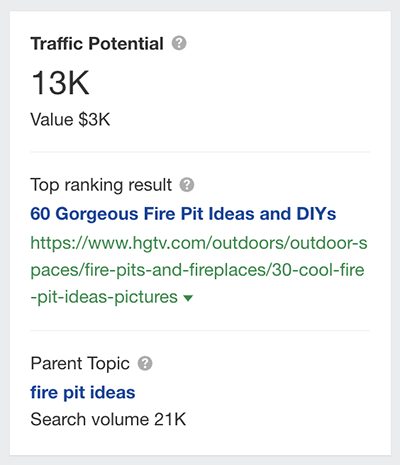
Its Keywords Explorer tool provides search volume estimates, ranking difficulty scores, search intent data, SERP history and clickstream-derived traffic estimates. One of my favorite Ahrefs metrics is its Traffic Potential score, which estimates the total search traffic a page could receive if it ranked number one for a target keyword. This often provides a much more realistic picture of a keyword’s value than search volume alone.
Project management in Ahrefs is more flexible than what you’ll find in most competing platforms too. Depending on your plan, the platform lets you track 5, 20 or 50 projects — making it slightly more generous here than Semrush (which lets you work with 5, 15 or 40 projects depending on plan) and significantly more generous than Moz (which provides allowances for 1, 3, 10 or 25 websites).
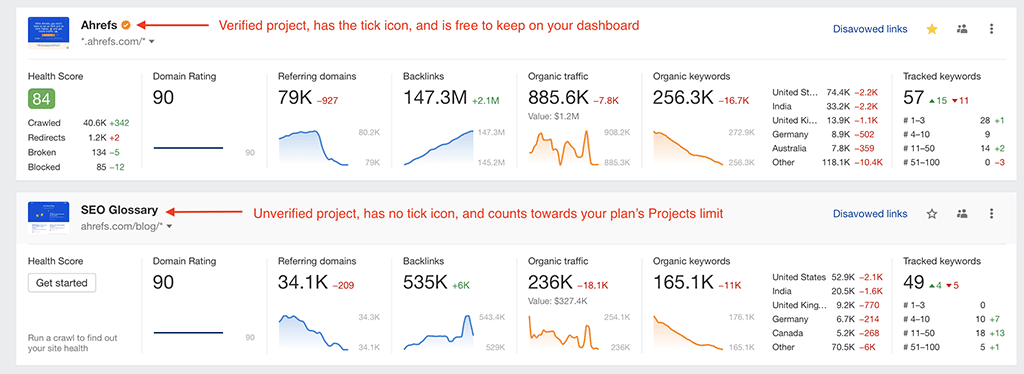
But Ahrefs’ project management story doesn’t end there. If you can verify ownership of a website via DNS, HTML upload or Google Search Console, you can add it as a project outside your formal project allowance. This means that even on Ahrefs’ entry-level plan, you can effectively manage an unlimited number of verified websites — a particularly useful feature for agencies, consultants and businesses managing multiple owned domains.
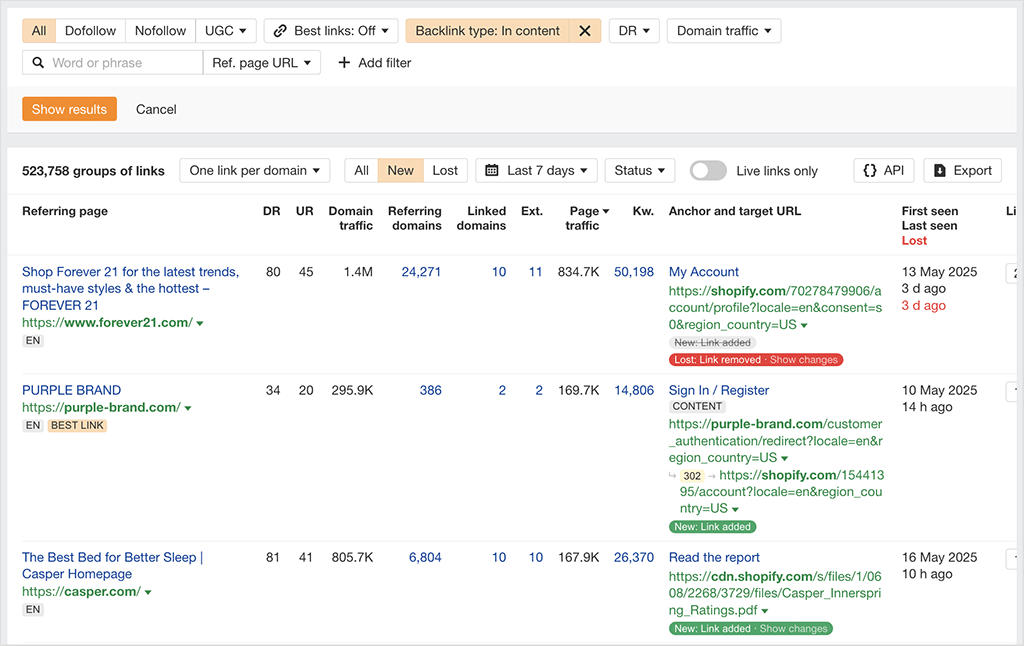
Link analysis has long been one of Ahrefs’ standout strengths. While Moz and Semrush now maintain slightly larger backlink databases, I still find Ahrefs one of the best tools for actually working with backlink data. Filtering by anchor text, referring domains, link type, platform and broken links is fast and intuitive, and uncovering link-building opportunities rarely takes more than a few clicks.
Site auditing is another strong area. Ahrefs provides comprehensive technical audits, Core Web Vitals reporting, internal linking analysis and clear prioritization of issues. The reports generated by Ahrefs’ site auditing tool are well structured and easy to navigate, and make it easy to identify and fix the problems that may be negatively impacting your search performance.
The platform also includes a growing collection of AI-powered content creation tools — you can use these for writing assistance, content optimization and content grading. They’re useful additions, although they currently feel less developed than the features provided by Semrush’s content marketing toolkit.
There are some important drawbacks to be aware of with Ahrefs, however. The biggest is cost. Its entry-level “Lite” plan costs $129 per month, but comes with fairly restrictive reporting limits. To unlock the platform’s full potential, many users will find themselves moving to a $249-per-month “Standard” plan.
AI visibility tracking can increase costs further. Unlike Semrush, SE Ranking and Moz, where AI visibility features are integrated in various ways into core plans, Ahrefs’ Brand Radar product is sold separately. Pricing for it starts at $199 per month, but this can rise significantly depending on the number of AI platforms and prompts you need to track. Access to all supported AI platforms currently costs $699 per month, making Ahrefs one of the most expensive AI visibility solutions covered in this roundup.
Another notable Ahrefs omission is brand sentiment analysis. While Semrush and SE Ranking both provide tools for understanding how AI systems describe and characterize brands, Ahrefs currently focuses primarily on citations, mentions and visibility metrics.
And weirdly, there’s no free trial for Ahrefs; this feels like a missed opportunity, especially given the platform’s relatively high price tag. Some free tools are available from the platform, but these are fairly limited in nature.
Despite these drawbacks, however, Ahrefs delivers high-quality, actionable SEO and AI visibility data — and lots of it.
Who is Ahrefs best for?
Ahrefs is an excellent choice for marketers, agencies and businesses that place a premium on data quality and research depth. It combines the largest keyword database in this roundup along with outstanding backlink analysis tools, powerful content research features and the largest AI visibility dataset currently available. Its pricing is high and its AI visibility tools require additional spend — but it’s one of the most capable and data-rich search visibility platforms on the market.
👉 You can read our full Ahrefs review here.
Don’t miss out on our free SEO toolkit
For a limited time only we’re offering our readers some excellent free SEO tools and resources. Sign up now to immediately receive:
- our downloadable cheatsheet containing the 20 key steps to ranking highly in search results
- extended free trials and discounts for leading SEO tools
- our downloadable cheatsheet on how to grow organic traffic to a blog
- 2 in-depth guides to SEO
- ongoing free tips and advice on SEO and growing your business
I hope you’ve found my roundup of the best SEO and AI Visibility tools useful — and that it helps you choose the right platform for your projects!
If you’d like to dive deeper, you’ll find plenty more of our comprehensive SEO and AI Visibility tool reviews and comparisons here. I should also mention that our dedicated SEO hub is packed with loads of practical SEO tips and how-to guides.
Finally, if you have any thoughts or comments on any of the tools mentioned above, feel free to leave a comment below — we read all of them and will do our best to help. 🙂
Frequently asked questions about SEO / AI visibility tools
What is an SEO / AI visibility tool?
An SEO / AI visibility tool is a platform that helps you understand how visible your website or brand is in both traditional search engines and AI-powered discovery platforms.
In practice, this usually means giving you access to standard SEO features — like keyword research, rank tracking, site auditing and backlink analysis — alongside newer tools for monitoring how your brand appears in AI-generated answers provided by platforms like ChatGPT, Gemini, Perplexity and Google AI Overviews.
The best SEO / AI visibility tools don’t just show you where you rank in Google; they also help you understand whether AI systems are mentioning your brand, citing your content and recommending you ahead of competitors.
What’s the difference between an AI SEO tool and an AI visibility tool?
An AI SEO tool usually uses artificial intelligence to help you carry out SEO tasks — for example, writing content briefs, suggesting keywords, optimizing copy or generating meta descriptions.
An AI visibility tool does something slightly different: it helps you monitor how your brand or content appears inside AI-generated answers.
So, while there is some overlap between the two categories, they are not quite the same thing. One uses AI to help you do SEO; the other helps you understand how visible your content or brand is within AI search experiences.
The tools covered in this guide are best thought of as SEO / AI visibility platforms, because they combine traditional SEO features with tools for tracking brand mentions, citations and share of voice in AI-generated results.
What is AI visibility tracking?
AI visibility tracking is the process of monitoring how often your brand, website or content appears in AI-generated answers.
For example, if somebody asks ChatGPT, Gemini or Perplexity what the best ecommerce platform, SEO tool or CRM system is, an AI visibility tool can help you see whether your brand is mentioned in the answer — and, in some cases, whether your website is cited as a source.
More advanced AI visibility tools can also show you how your visibility compares to that of competitors; which prompts are triggering brand mentions; which sources AI platforms are relying on; and whether your brand is being described positively or negatively.
What is prompt tracking?
Prompt tracking involves monitoring the questions or requests that users enter into AI tools.
A prompt might be something like “best SEO tool for small businesses,” “top Shopify alternatives” or “which ecommerce platform is best for international selling?”
SEO / AI visibility tools use prompt tracking to show you how your brand performs for these sorts of AI search queries. This can help you identify the topics where you’re already visible, the competitors that are being recommended instead of you, and the content you may need to create or improve.
What are AI citations?
AI citations are links or references that AI-powered search tools use to support their answers.
For example, when Google AI Overviews, Perplexity or another AI search platform gives a response to a user’s question, it may cite web pages that it has used to generate or support that answer. These citations can matter because they can send traffic to your site, build trust in your content and increase the chances of your brand being associated with a particular topic.
However, getting cited by AI tools is not simply a matter of ranking highly in Google. It usually depends on a mix of factors, including content quality, topical authority, brand strength, clarity, trustworthiness and how well your page answers specific questions.
Which SEO / AI visibility tool is best overall?
For businesses that want the strongest all-round mix of SEO features and AI visibility tracking, Semrush is probably the best overall choice. It combines a very broad SEO toolkit with AI visibility features covering prompt tracking, citations, sentiment analysis and competitor benchmarking.
That said, Ahrefs is a strong choice if access to the largest AI visibility dataset is your main priority, while SE Ranking offers a good balance of features, usage limits and pricing. Moz is worth considering if brand authority tracking and affordable API access matter to you, and Ubersuggest is the obvious option if you need a low-cost entry point into SEO and basic AI visibility tracking.
So the best tool ultimately depends on your budget, workflow and the level of AI visibility data you need.

No comments